
You didn’t change your diet.
You didn’t stop exercising.
But your body still changed.
Your jeans feel tighter around your stomach.
Your arms look softer in photos.
You feel heavier, even though the number on the scale barely moved.
Most women are told the same thing: It’s just age.
But that explanation leaves out something important.
What’s actually changing isn’t just your weight. It’s your composition.
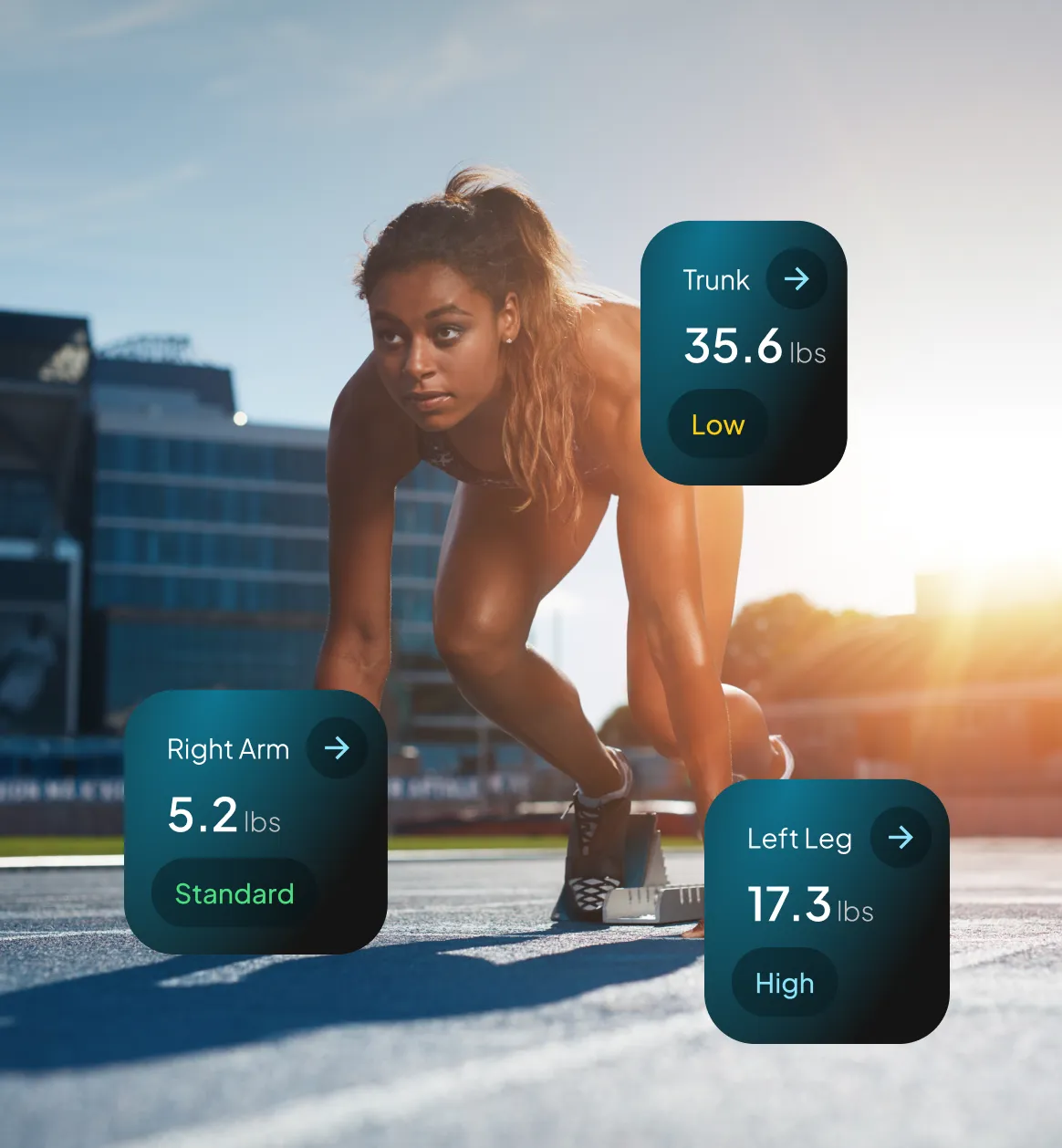
What’s actually changing
After 40, many women begin losing muscle and gaining fat at the same time.
Not dramatically. Quietly.
About 1% of muscle per year.
And where fat is stored can change too.
Instead of sitting mostly under the skin, more of it can begin collecting around the organs. That is visceral fat.
You can’t see it in the mirror.
You can’t pinch it with your fingers.
But it matters more than most women were ever taught.
- Your weight looks familiar, but your body does not
- Your midsection changed even though your routine didn’t
- Your arms or legs feel softer than they used to
- You feel puffy even on days you eat clean
- Your doctor says your labs look fine, but you know something feels off
- You tried eating less or doing more cardio and got nowhere
If that sounds familiar, you’re not imagining it.
Why the scale makes this more confusing
A bathroom scale only shows total weight.
It doesn’t tell you how much muscle you lost.
It doesn’t tell you how much fat you gained.
It doesn’t tell you where that fat is being stored.
So you could lose 3 pounds of muscle and gain 3 pounds of fat, and the scale would show no change at all.
That’s why so many women say the same thing: “My weight didn’t change much, but my body did.”
Muscle is metabolically active. It helps you burn more energy at rest.
Fat is stored tissue. It doesn’t do the same job.
When muscle falls, metabolism often falls with it. That’s why the same routine that worked at 30 may stop working at 42.
The scale can’t separate any of that. It gives one number and leaves out the part that actually explains what’s happening.
This is why eating less doesn’t always solve it.
This is why more cardio doesn’t always solve it.
This is why many women feel stuck even when they’re trying.
The shift many women are making now
Instead of tracking weight, they’re tracking composition.
That means:
- How much of the body is fat
- How much is muscle
- Where the changes are happening
- How those numbers move over time
Until recently, that usually meant paying for a clinic test.
DEXA scans often cost $150 to $300 each.
Now, similar data can be measured at home.
Meet the Hume Pod
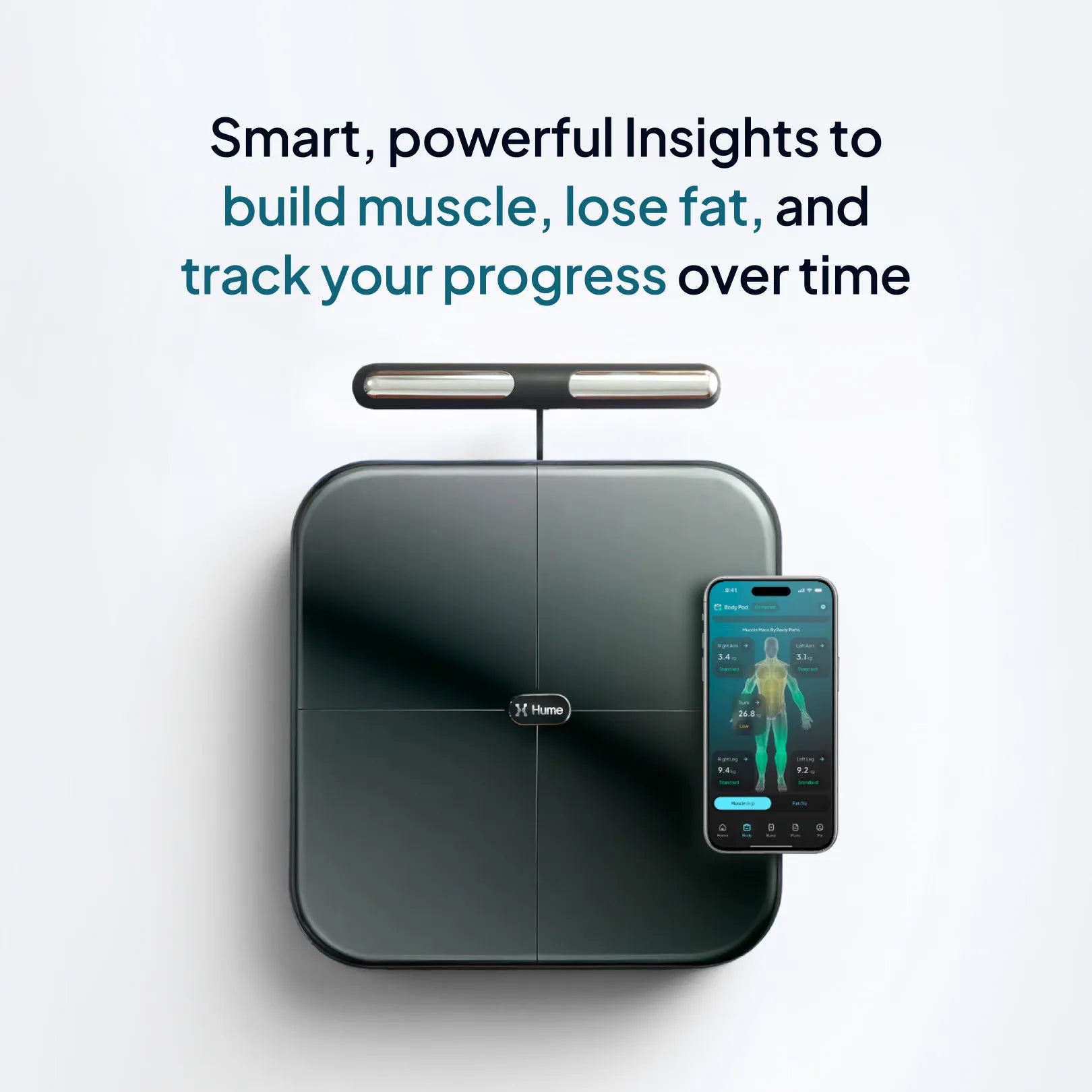
The Hume Pod is a body composition scale built to show more than body weight.
You step on the platform, hold the retractable hand electrodes, and in about 60 seconds you get a fuller picture of what’s happening inside your body.
Most home scales use 4 contact points.
They read your lower body, then estimate the rest.
The Hume Pod uses 8 contact points, which means it measures through both hands and feet.
That matters because it gives a more complete read across the body.
- 8 contact points, not 4. Hands and feet are both measured, not just feet.
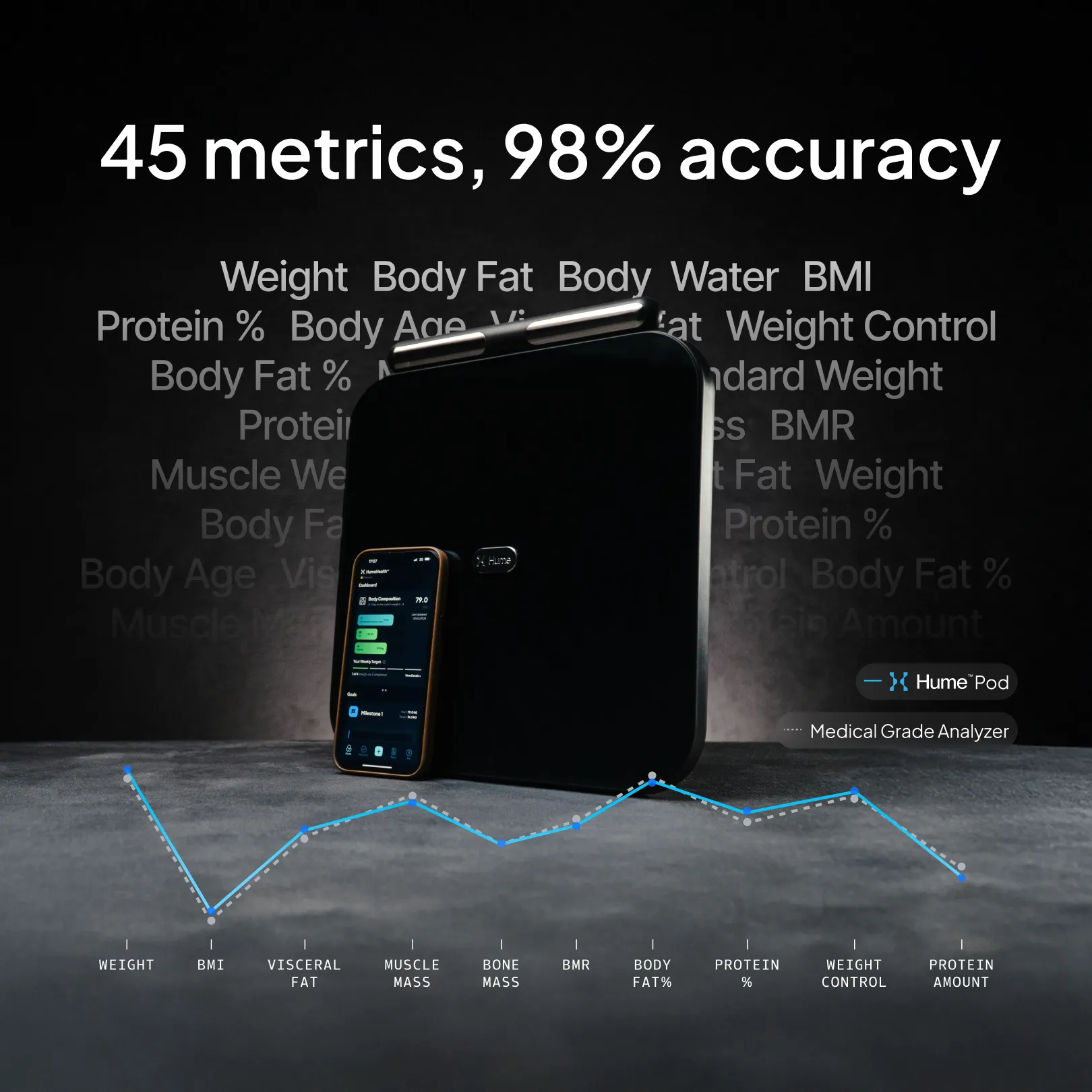
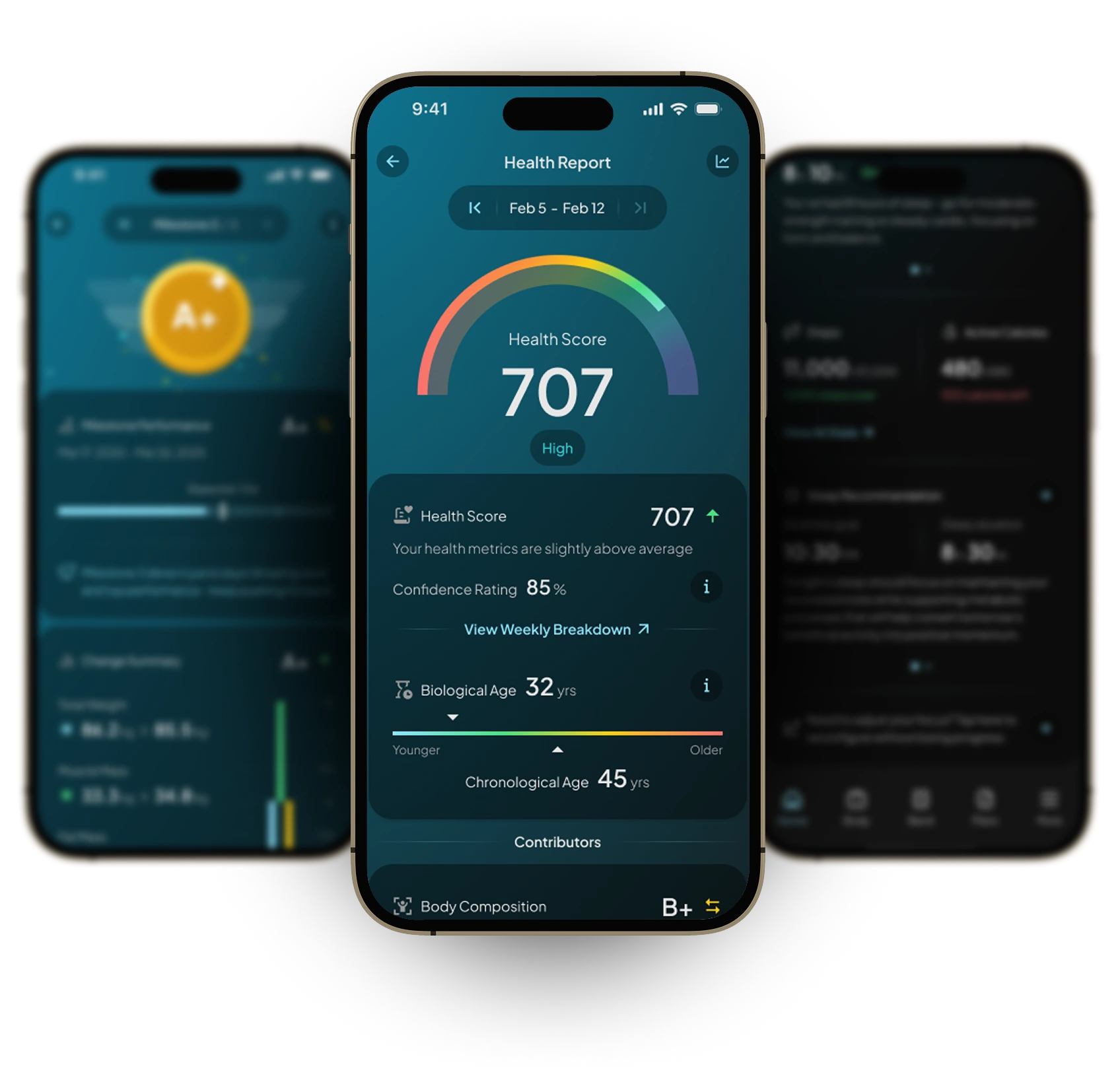
- 45+ metrics per scan. Including body fat, skeletal muscle, visceral fat, metabolic age, hydration, and more.
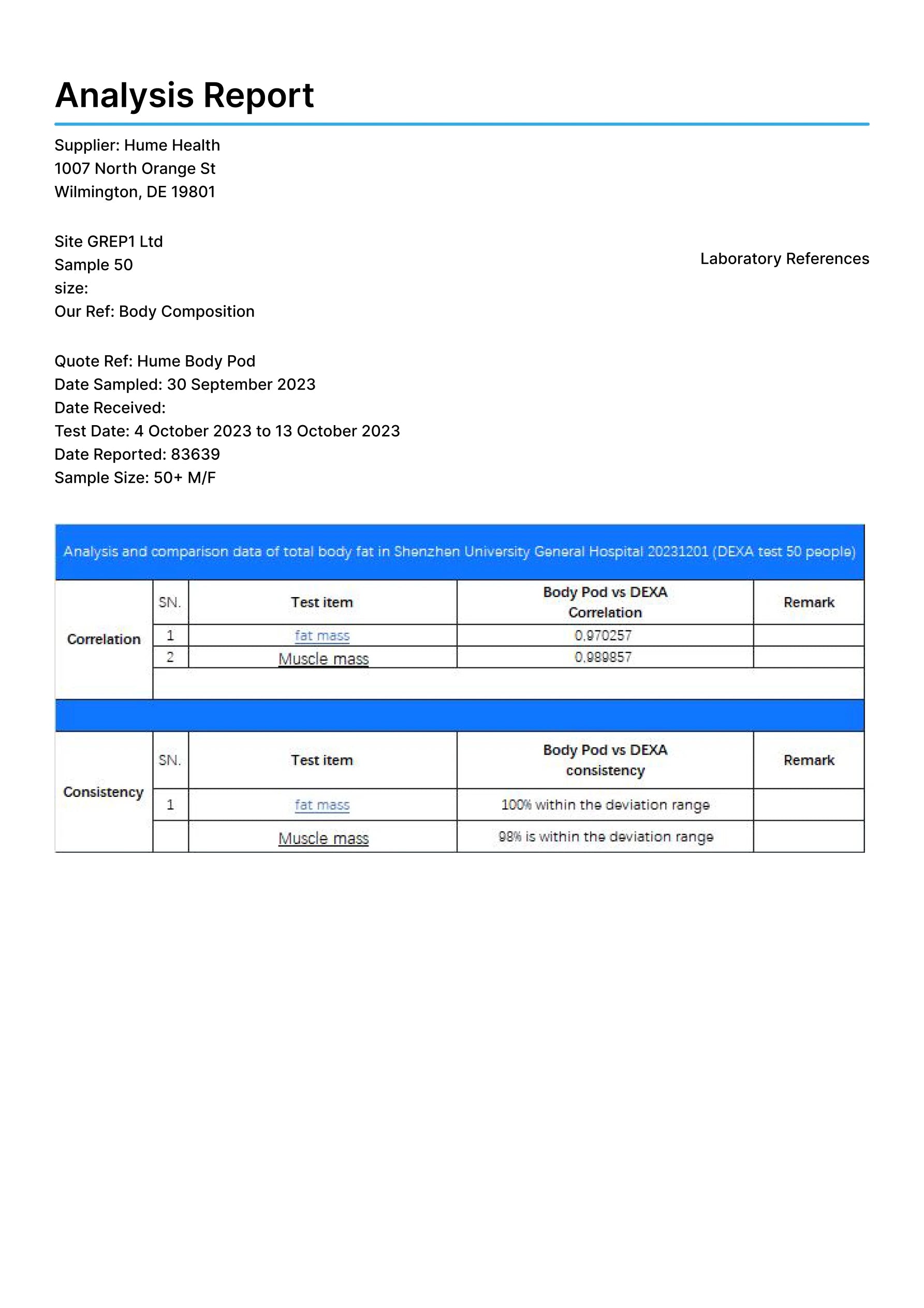
- 98% correlation with DEXA. Based on independent Socotech validation.
- No subscription. The app and tracking features are included.
Why this matters for women over 40
Visceral fat
This is the fat many women worry about but can’t actually see. Hume Pod gives it a number, so progress can be tracked instead of guessed.
Muscle by body part
Instead of one broad score, segmental analysis shows where muscle is stronger or weaker across the body.
Metabolic age
This translates metabolic rate into something easier to understand. For many women, it’s the first time they can see the cost of muscle loss in a simple number.
Body water
Hydration changes can help explain why some days feel puffy, flat, or off, even when weight alone doesn’t make sense.
What women are saying
I almost didn’t buy it because I was tired of ordering health stuff that ends up in a drawer. But I kept feeling like something was off. My weight was basically the same, yet my waist looked different. On my first scan I saw my visceral fat was higher than I expected and my muscle was lower than I thought. That was the first time the whole thing made sense. I started lifting 3 times a week. About 12 weeks later, my weight was still close to the same, but my body didn’t look the same anymore.
✓ Verified BuyerMy daughter bought me one and I thought it was going to be another fancy scale. Then I saw the muscle split side to side. My left side was weaker than my right and I had no clue. My trainer changed a few things based on that. Around 8 weeks later, the gap had narrowed. That kind of detail is what made me keep using it.
✓ Verified BuyerI was skeptical because I’d already tried a few devices that looked smart but didn’t actually tell me anything useful. This one did. The hydration number explained why I felt puffy all the time, and the metabolic age number was a wake-up call. I even brought the screenshots to my OB-GYN. My only complaint is that I wish the app looked a little nicer. But the data itself is what I bought it for.
✓ Verified BuyerWhat the first 8 weeks usually look like
Most women don’t see a dramatic change on day one. What changes first is understanding.


How it compares
| Feature | Hume Pod | Bathroom Scale | DEXA Scan |
|---|---|---|---|
| Body fat % | ✓ | ✗ | ✓ |
| Visceral fat level | ✓ | ✗ | ✓ |
| Muscle by segment | ✓ | ✗ | ✓ |
| Metabolic age | ✓ | ✗ | ✗ |
| Body water % | ✓ | ✗ | ✗ |
| At-home use | ✓ | ✓ | Clinic only |
| Tracking frequency | Daily | Weight only | Occasional visit |
| Cost | $229 sale price | Low upfront cost | $150–$300 per scan |
| Subscription | None | None | Per-visit fee |
Trusted by athletes and health-focused users:





The argument for tracking composition, not just weight
Spring Sale: 40% Off the Hume Pod
Right now the Hume Pod is $229, down from $352. That’s less than the cost of two DEXA visits, with no subscription and no recurring fee.

- 8-point full body measurement
- 45+ metrics per scan
- Multiple user profiles
- Full app access included
- HSA / FSA eligible
- 45-day money-back guarantee
- Free shipping
HSA / FSA eligible • Free shipping • 45-day return window
That works out to about $0.63/day across the first year.
45-Day Money-Back Guarantee
Use it for 45 days. If it doesn’t help you understand your body more clearly, return it for a refund.
You’re not imagining it
Body changes after 40 are common.
But understanding those changes has always been harder than it should be.
For years, most women were given one number and told to make sense of it.
That number was weight.
Now more women are starting with better data instead.
And for many of them, that starts with a 60-second scan at home.
See What Your Scale Isn’t Showing
Spring Sale pricing ends Sunday. Hume Pod is $229, down from $352.
Get 40% Off — $229 →