I Tried Everything for My Back Pain. The Thing That Finally Worked Cost Less Than One Clinic Visit.
Six doctors. Four MRIs. Fourteen months of PT. Then a strength coach made an offhand comment that changed everything. Here’s the whole story.

You’ve tried the stretches. The chiropractor. The new mattress. The foam roller your friend swore by. Maybe even cortisone shots. And every morning, you still wake up with that same deep ache in your lower back — the one that makes you feel ten years older than you are.
What if the problem was never your back? What if the real cause was something no doctor, no therapist, and no amount of stretching could ever see — until now?
A simple at-home device is showing thousands of women over 40 exactly why their back pain won’t go away. It takes thirty seconds. It costs less than one clinic visit. And for many, it’s the first time anyone has shown them what’s actually wrong.
Where It Really Starts
Most people think back pain is about their back. It’s usually not.
Research published in the Journal of Orthopaedic & Sports Physical Therapy has consistently shown that the majority of chronic lower back pain originates not from the spine itself, but from muscle imbalances elsewhere in the body. One side quietly picks up the slack for the other. Your dominant leg absorbs more impact on the stairs. Your dominant arm carries the groceries. Over months and years, the gap between your strong side and your weak side widens — and your spine pays the price.
When your left glute is weaker than your right, your pelvis tilts. Your hip shifts. Your shoulder drops to compensate. Over time, this silent chain reaction leads to herniated discs, sciatica, chronic knee pain, even plantar fasciitis. What started as a “tight back” becomes a full-body structural problem — and it gets worse every day you don’t address it.
Doctors have a clinical name for the most common version of this: gluteal amnesia, sometimes called “Dead Butt Syndrome.” It happens when one glute essentially shuts down from underuse, forcing your lower back to do all the heavy lifting. It’s invisible to the eye. You can’t feel it. And it’s the hidden cause behind millions of cases of so-called “unexplained” back pain.
“The majority of the chronic back pain patients I see have a measurable muscle imbalance they don’t know about. The problem isn’t their back — it’s what’s happening below it.”— a sports medicine physician in Boston, MA
There’s now a way to see these imbalances at home, in thirty seconds, for less than the cost of one clinic visit. See how the Hume Pod works →
What Your Scale Can’t Show You
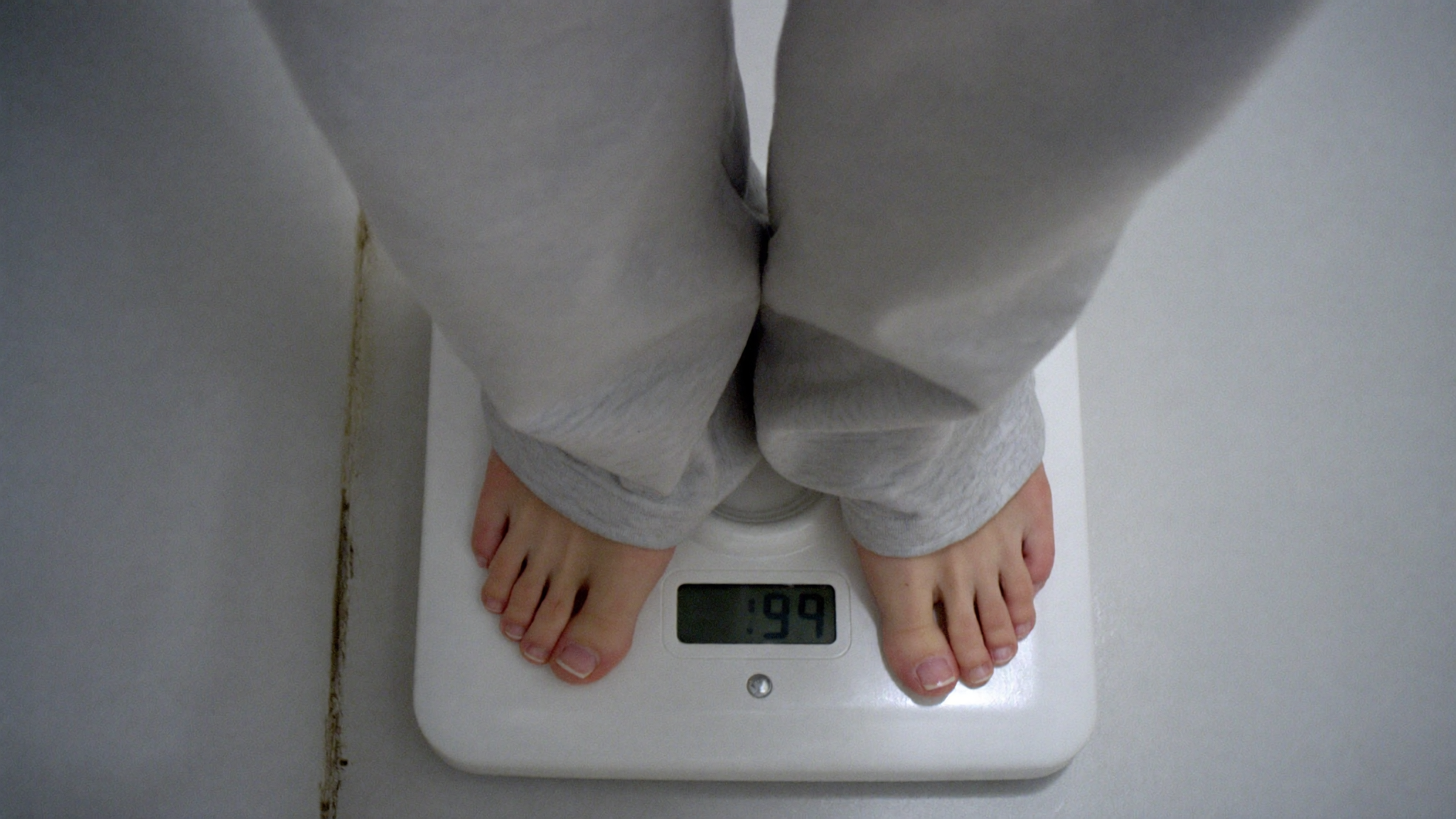
Here’s what nobody tells you: chiropractors, massage therapists, and even most physical therapists are treating symptoms. They can feel that your back is tight. They can see that your posture is off. But they can’t measure that your left leg has significantly less muscle than your right.
What you actually need is a way to see each part of your body separately — is your left side weaker? Is your right leg carrying more weight? Is your core doing its job, or is your back compensating?
Regular scales can’t tell you any of this. They send a current through your feet and guess everything above your waist. It’s like checking the tire pressure on two wheels and assuming all four are fine.
Without that kind of complete picture, every adjustment, every stretch, every treatment plan is an educated guess. And for a lot of people, those guesses have been costing them years and thousands of dollars.
The $300 Problem
There is a scan that can show you exactly what’s going on inside your body — where you’re losing muscle, where fat is building up, and which side is weaker. It’s called a DEXA scan, and it’s the gold standard in clinical body composition analysis.
But it costs $150–$300 every time. You have to schedule an appointment at a clinic. It involves low-dose radiation. And most people get one — maybe two — per year. That’s like checking your bank account twice a year and hoping everything’s fine in between.
The fundamental problem isn’t access to good technology. It’s that the good technology has been locked behind clinic doors and price tags that make regular monitoring impossible.
Until recently.
A Simpler Way

A device called the Hume Pod has been quietly reshaping how people — and their doctors — think about back pain, body composition, and long-term health.
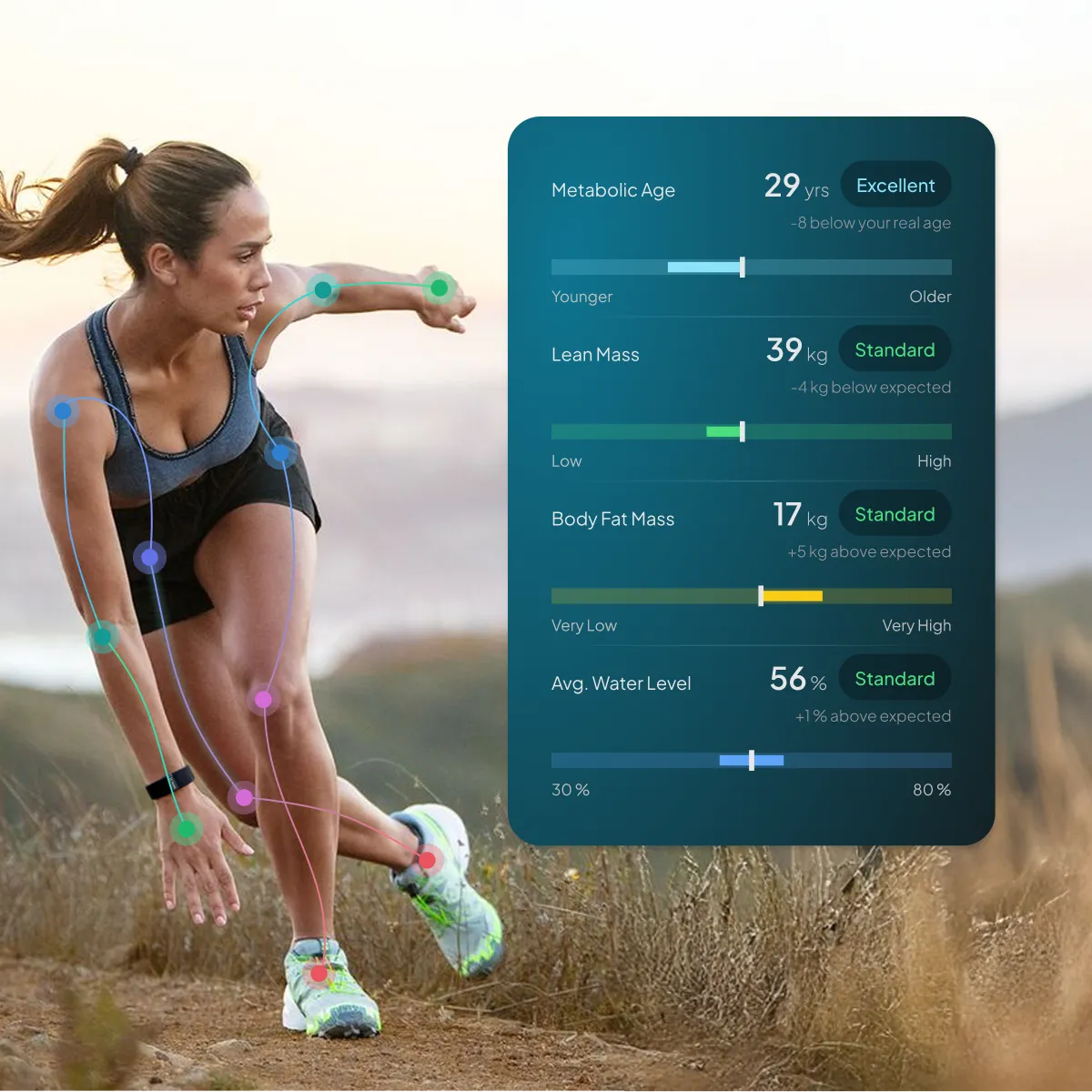
It’s a simple at-home scan that shows you what’s really going on inside your body — the same insights that used to cost $300 or more per clinic visit. You step on, hold the handles, and in thirty seconds you get a complete picture: where muscle is strong, where it’s weak, where fat is accumulating, and whether your left and right sides are balanced.
No jargon. No medical degree required. The results are color-coded in the free app — green means healthy range, yellow means watch it, red means take action. You see exactly what’s happening, in language anyone can understand.
Third-party lab testing by Socotech found that the Hume Pod matches DEXA scan results within 98% accuracy — independently verified, not a marketing claim. That’s the same level of precision clinicians rely on, from a device that fits next to your bathroom sink.
“Had no clue one leg was doing all the work. Started single-leg stuff on the weak side and three months later my lower back pain is basically gone. Wish I’d done this years ago.”
★★★★★ Rated 4.8 by 48,000+ customers
Stop Guessing Why You Hurt
Save over $120 + free shipping + 45-day risk-free trial
- Hume Pod device ($352 value)
- Free Hume Health app — no subscription
- 45+ body metrics incl. segmental analysis
- 24 user profiles — one device, whole family
- 1-year warranty + 45-day money-back guarantee
- Free worldwide shipping
Discount applied automatically • Free shipping • No subscription ever
What One Scan Changed for Sarah
Sarah is a 49-year-old elementary school teacher in Denver. For three years, she tried everything: chiropractic adjustments twice a month (thousands of dollars and counting), a new mattress, a standing desk, a daily stretching routine. Nothing worked for more than a few days. She was starting to think this was just what getting older felt like.
Then she stepped on a Hume Pod at her sister’s house. Thirty seconds later, she saw the problem in black and white: one side of her lower body had significantly less muscle than the other. One glute had essentially stopped working — a condition her doctors had never measured because they didn’t have a tool that could see it.
Armed with the data, Sarah started targeted single-leg exercises for her weak side. She scanned weekly to track changes. Within two weeks, she could see measurable improvement. By week four, the imbalance had closed dramatically and her pain frequency had dropped from daily to a few times a week. She canceled her standing chiropractic appointments.
By week eight, the imbalance was essentially gone. So was the pain.
“I didn’t need another adjustment. I needed to see what was actually wrong.”— Sarah, 49, Denver, CO
Her story isn’t unusual. Across more than 48,000 verified reviews, the same pattern repeats: people who spent years and thousands of dollars chasing symptoms found the cause in their first scan.
Why Trying Harder Backfires

Here’s the counterintuitive part: for people with hidden imbalances, doing more exercise often makes the problem worse.
When you squat, deadlift, or run without knowing that one side is weaker, your strong side compensates automatically. The weak side stays weak. The strong side gets stronger. The gap widens. And the pain intensifies — not because you’re not trying hard enough, but because you’re training the wrong side harder.
This is why so many people plateau or get injured despite doing “everything right.” They’re missing the one piece of information that would change their entire approach: which specific area needs attention.
The Hume Pod solves this by showing you exactly where to focus. When Ryan saw that his right leg had significantly less muscle than his left, he stopped doing bilateral squats and started targeted single-leg work. When James came back from shoulder surgery, he used weekly scans to track the difference between his arms as he rebuilt strength.
“Coming back from shoulder surgery, I could actually see my right arm catching up to my left week by week. Way more motivating than guessing if PT was working.”
Trusted by People Who Know
It would be one thing if this were just another consumer gadget with clever marketing. It’s another thing entirely when clinicians stake their professional reputation on it.
Thousands of clinics — chiropractors, physical therapists, weight loss centers, longevity practices — now use the same 8-electrode BIA technology in their offices. Not because they were paid to endorse it, but because the data is accurate enough to guide clinical decisions.
“Started recommending this to my back pain patients. It shows us what’s causing the problem and gives them something to track between visits instead of just coming in every two weeks.”
“I used to spend $175 at the PT just to get a sense of where I stood. Now I check every morning at home. Within a few weeks, I could see exactly what was improving and what wasn’t.”
On Ozempic or Mounjaro? Read This.
If you’re on a GLP-1 medication, this might be the most important thing you read today.
Research shows that up to 39% of weight lost on these drugs can be muscle, not fat. Your regular scale shows the number going down and you celebrate — but it can’t tell you whether you’re losing the right kind of weight.
The Hume Pod shows you exactly what’s happening: are you losing fat, or are you losing the muscle your body needs to stay strong, balanced, and pain-free? That’s the difference between getting thinner and actually getting healthier.
“Was on Mounjaro dropping weight fast and feeling great about it. Then the Pod showed half of what I lost was muscle. Adjusted my protein, added resistance, and now I’m actually losing fat. Totally different result.”
How It Actually Works
Step On and Hold the Handles
The device reads your whole body in sections — arms, legs, and core — to see what’s happening on each side.
Open the App and See Your Results
In 30 seconds, you’ll see where muscle is strong, where fat is building up, and whether your left and right sides are balanced.
Know What to Work On
Focus on the areas that need attention. Track your changes week over week and see real progress.
The free Hume Health app syncs with Apple Health, Fitbit, and Garmin, so your body composition data sits alongside your steps, sleep, and heart rate. Up to 24 people can create individual profiles on a single device, each with their own tracking history. One device, one household, everyone’s health journey tracked independently.
There’s no subscription. No monthly fee. No hidden costs. All of your health insights, weekly trends, and progress tracking are included free, forever.
What You’re Really Paying For
The average American with chronic back pain spends more than $2,000 a year on treatments that address symptoms without ever identifying the cause. Here’s how the options compare:
| Option | Cost | |
|---|---|---|
| Clinic body scan (DEXA) | $600–$1,200/yr | 2–4x per year |
| Gym with body scanner | $480–$960/yr | Gym hours only |
| Chiropractic (2x/month) | $1,200–$3,600/yr | Treats symptoms |
| Hume Pod | $229 one-time | Unlimited daily scans |
A single clinical scan costs more than the Hume Pod does forever. And unlike basic smart scales that only measure from your feet and estimate everything above your waist, the Hume Pod reads each side of your body separately — which is the only way to spot the imbalances that cause most chronic pain.
Finally understand what’s really happening inside your body — not just your weight
The Hume Pod shows you where you’re gaining muscle, where fat is hiding, and whether your body is actually getting healthier — not just lighter.
- See if you’re actually losing fat — or just losing muscle
- Know exactly which areas are getting stronger
- Understand why your back, hips, or posture feel off
- Track your real health progress, not just a number on a scale
HSA/FSA eligible. Free worldwide shipping. Rechargeable battery lasts up to one year per charge.
Common Questions
Will this actually help with my back pain?
What if it doesn’t work for me?
How is this different from my bathroom scale?
Is there a monthly subscription?
How accurate is it really?
I’m on Ozempic/Mounjaro — is this relevant for me?
Can my whole family use it?
★★★★★ Rated 4.8 by 48,000+ customers
Your Body Is Telling You Something.
Now You Can Finally See It.
One scan. One clearer picture of your health. Every single morning.
- Hume Pod device ($352 value)
- Free Hume Health app — no subscription
- 45+ body metrics incl. segmental analysis
- 24 user profiles — one device, whole family
- 1-year warranty + 45-day money-back guarantee
- Free worldwide shipping • HSA/FSA eligible
Discount applied automatically • 45-Day Risk-Free Trial • Free Shipping
or 18 payments of $12.72 with Shop Pay
⚠ Limited stock at this price — sale ends when inventory runs out