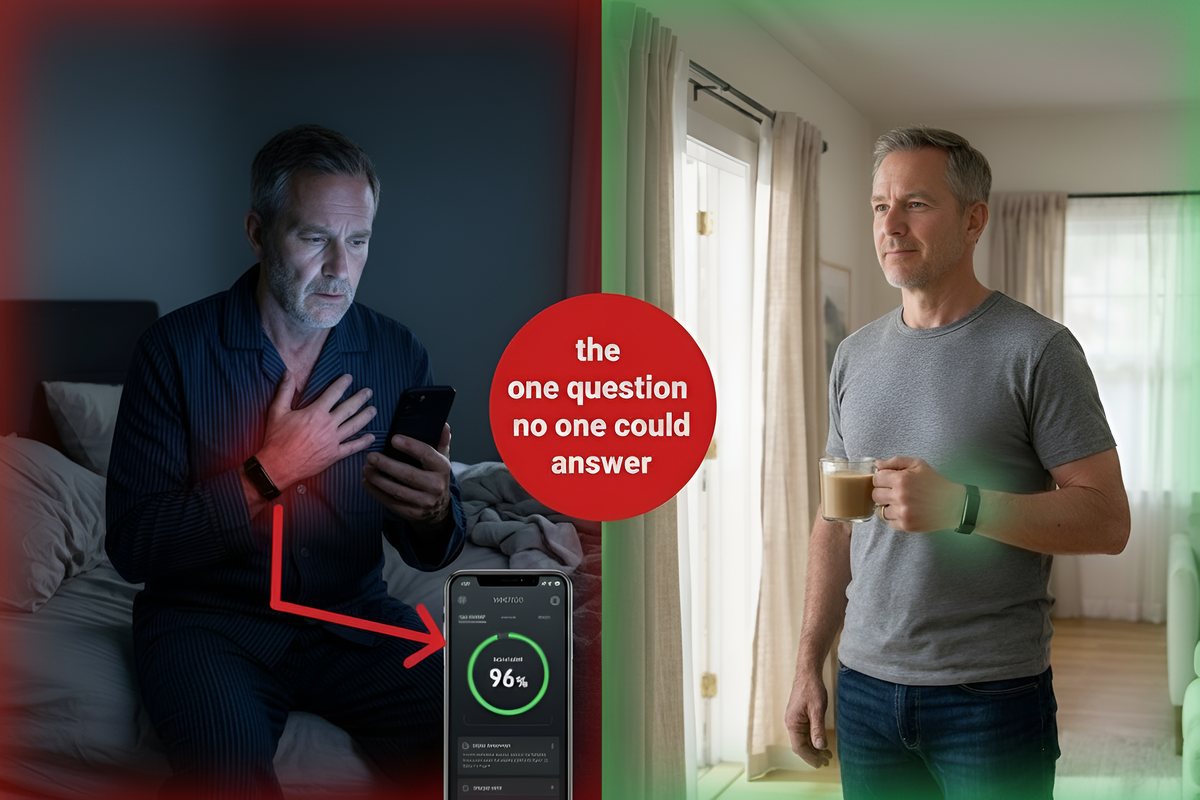
I Wore Whoop for 600 Days. It Never Once Answered The Question That Actually Keeps Me Up at Night!
2,954+ verified reviews. A community of over 1.2 million people, a lot of them tired of paying monthly to read data off their own skin.
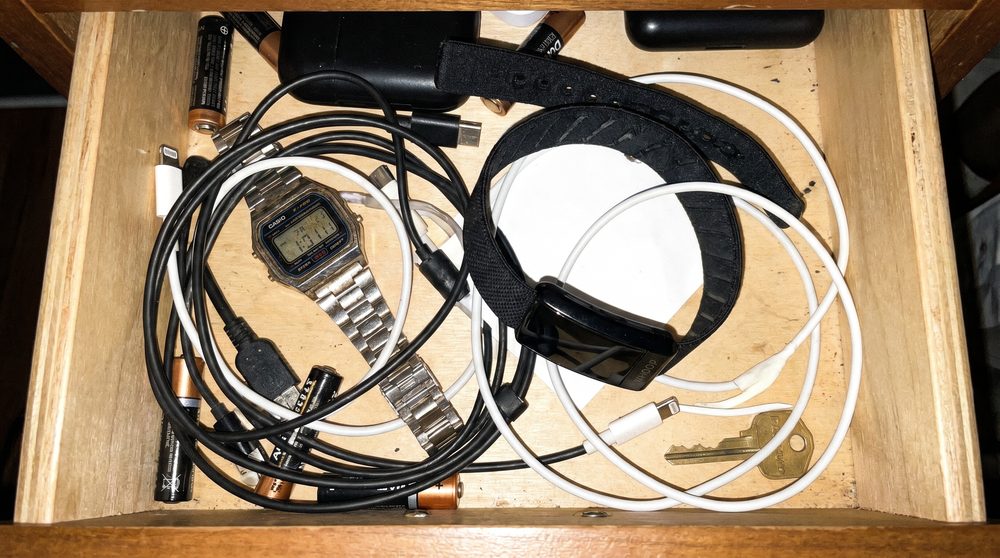
I wore a Whoop for 600 days straight. Then one morning I took it off and never put it back on.
Here's why. After a while you know what the app will say before it says it. If I drink, sleep badly, push too hard, low recovery. If I eat clean, sleep, ease off, there's your 95 to 100%.
So I was paying $200 a year to be told what a hangover is.
And look, Whoop is good at what it does. So is Oura. Whoop's recovery and strain reads are genuinely useful if you're training hard. Oura's sleep tracking is some of the best out there. No argument from me.
But I'm not chasing two minutes off a 5K run. I'm not a pro athlete fighting for the last two percent. So what was I actually paying for?
What I think about, quietly, around 2am, is simpler and worse.
The Gadgets Never Pointed At THIS Question
Am I fine, or is something slowly going wrong inside me that I won't catch until it's too late to fix?
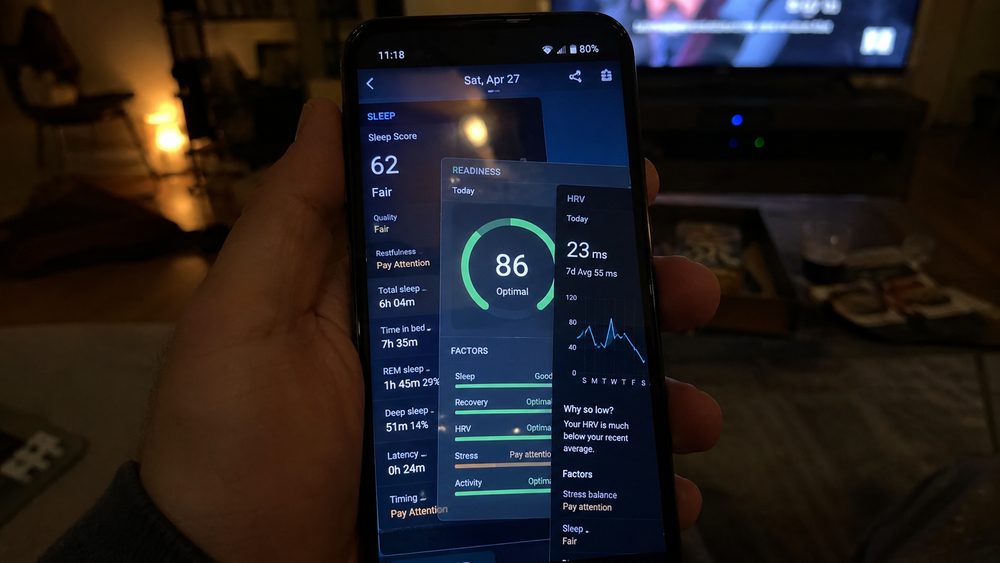
I had all of them. Sleep score. Readiness. Recovery. HRV chart. A resting heart rate graph I'd stare at like tea leaves. Every morning I'd open an app and get the same kind of number. "You slept badly. Your recovery is low. Take it easy."
Okay. Why? What do I do about it today? Silence. Just another number.
That's the thing nobody tells you when you buy in.
These tools answer "am I ready to train." Great question at 25. After 40, the question that matters shifted, and none of my devices moved with it.
The $200/y Subscription Math Annoyed Me
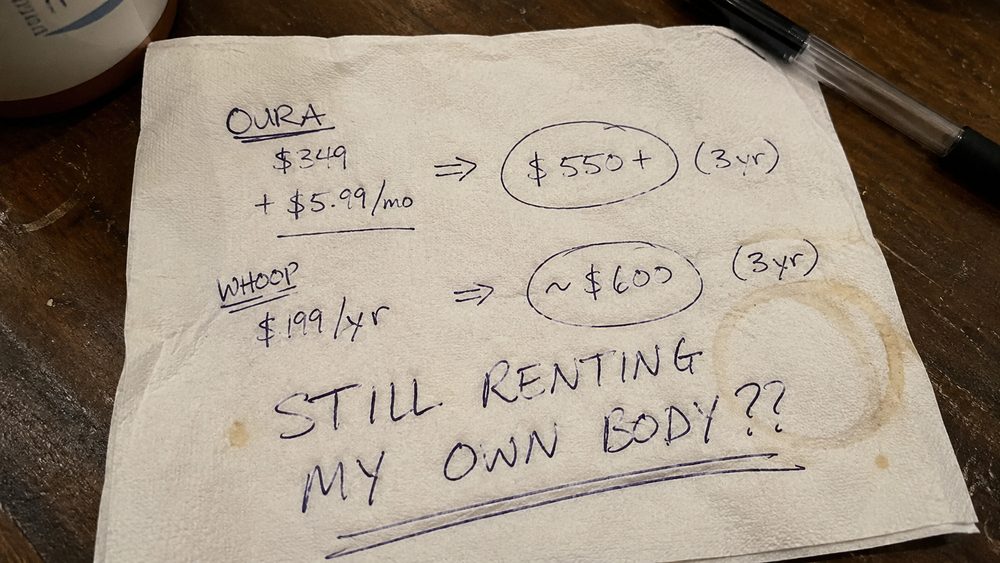
I sat down and added it up. This is the part that flips people from mildly irritated to actually reconsidering.
Oura: $349 for the ring, then $5.99 a month on top. Let your membership lapse and you're back to three daily scores and not much else. Three years in, you're past $550. Oura's own support page confirms full features need an active membership.
Whoop: subscription-led, minimum $199 a year. Three years, roughly $600. Stop paying and the strap stops giving you data.
I bought the hardware. It's on my wrist. And I'm still paying every month to read what it pulls off my own skin.
I wasn't the only one doing this math.
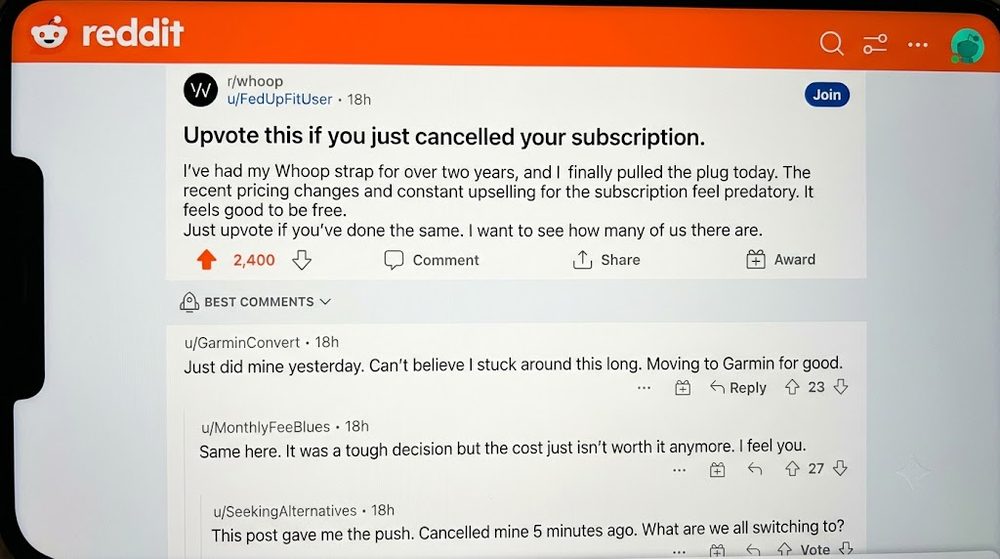
When Whoop changed its upgrade terms, a Reddit post that said nothing but "upvote this if you just cancelled your subscription" pulled 2,400 upvotes. A whole room of people running the same numbers.
So I went looking for the opposite. Something you buy once. First reaction to what I found: this is probably a scam.
Let Me Get the Skepticism Out of the Way, Because I Had All of It
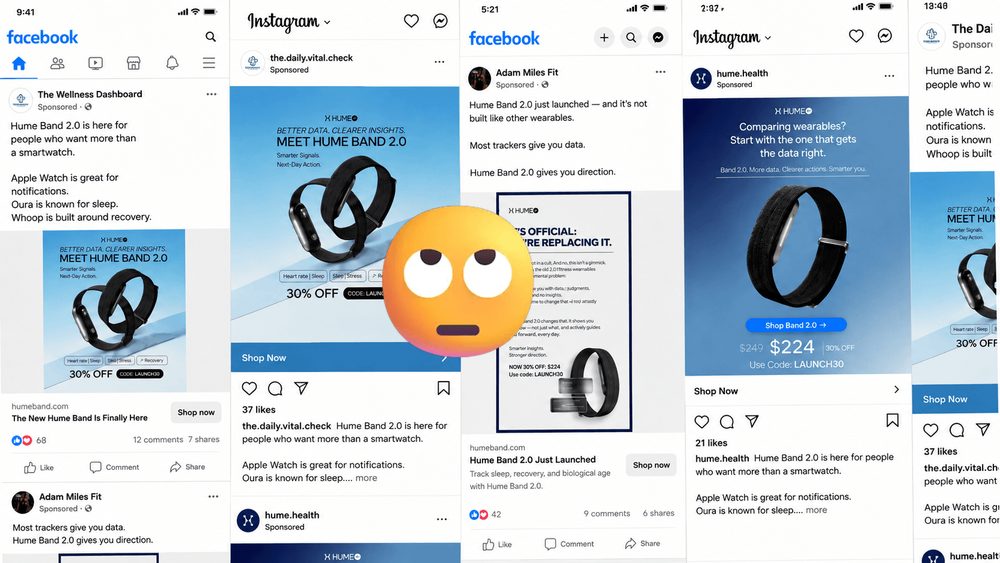
I saw the Hume Band 2.0 in about forty ads. Longevity band. Detects early illness. Reverse your biological age. My eyes rolled so hard they nearly fell out.
So I did the thing you're supposed to do. I read the critical reviews first, on purpose. There are YouTubers who tore it apart. Threads calling it over-the-top marketing. I went in expecting to talk myself out of it.
Here's what changed my mind. And this is the most important paragraph on the page, so read it slow.
I stopped expecting it to be a doctor.
That's the trap with this entire category. The second you expect a wristband to be a team of cardiologists, it fails, and every honest reviewer will tell you the same. As a heart-attack predictor, no wearable on earth clears that bar yet. Anyone selling you one is lying.
Think of a smoke alarm instead. A smoke alarm doesn't diagnose the fire or put it out. It catches the signal early enough that you go look. That's the honest version of what this is. Not a diagnosis. An early nudge. A "hey, something looks off this week, go get it checked" instead of finding out six months late.
Judged as that, a pattern-spotter that tells you when to look closer, it started to make sense. So here's what actually pulled me in.
1. It Turns Eleven Confusing Numbers into One Clear Answer
Owning three trackers doesn't give you clarity. It gives you three apps that disagree. A readiness number here, a sleep score there, an HRV chart somewhere else, all pointing different directions, and you on the couch at midnight Googling symptoms because no single one will just tell you what to do.
The Hume Band pulls heart rate, HRV, blood oxygen, skin temperature, sleep stages, strain, recovery, blood pressure trends, and metabolic signals into one place. Then a coach built on Claude AI reads all of it and tells you, in plain English, which way your body is heading and one thing to change that day.
One direction. Not eleven charts to panic over. For me that was the whole game.
2. It Watches for the Decline You Can't Feel Yet
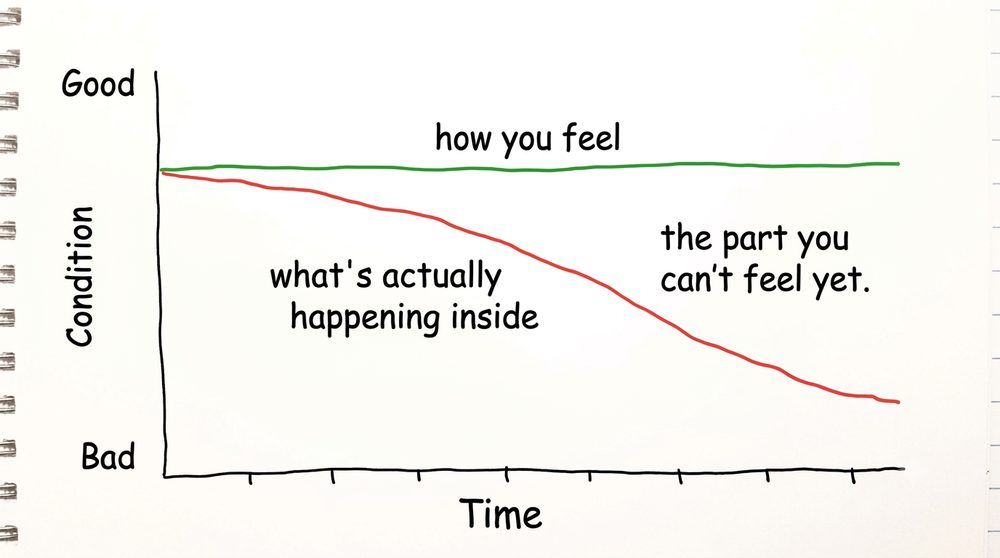
Your fitness tracker answers "am I ready to work out today." Fine question at 25. After 40, the question is whether something is quietly trending the wrong way, months before it shows up as a symptom.
Hume tracks the recovery and metabolic signals that shift early, so you're watching your health the way it actually changes. Gradually. Not waiting for the day it announces itself.
3. It Shows How Fast You're Aging, and Whether You Can Slow It
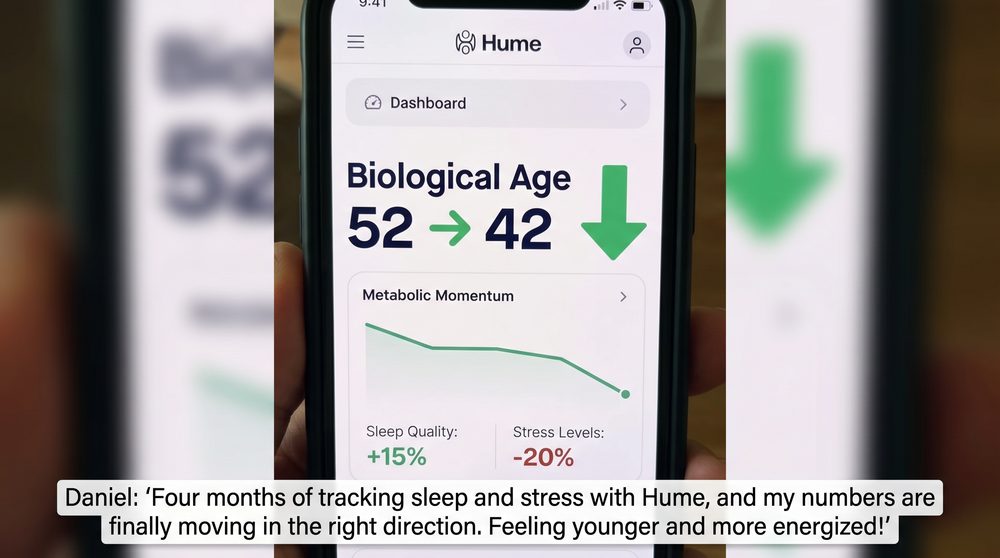
This is the part a normal tracker won't touch. Metabolic Momentum shows whether your daily habits are buying you years or costing you them, as a direction you can move.
Hume reports that 71% of members see a measurable drop in biological age within three months, and that members who changed their habits based on the data added an average of 6.8 years. Those are Hume's own figures, from people who fixed their sleep, stress, and movement. Not the band adding years by itself. What I liked was the direction being visible at all.
4. It Flags Trouble Early, Then Tells You to See a Doctor
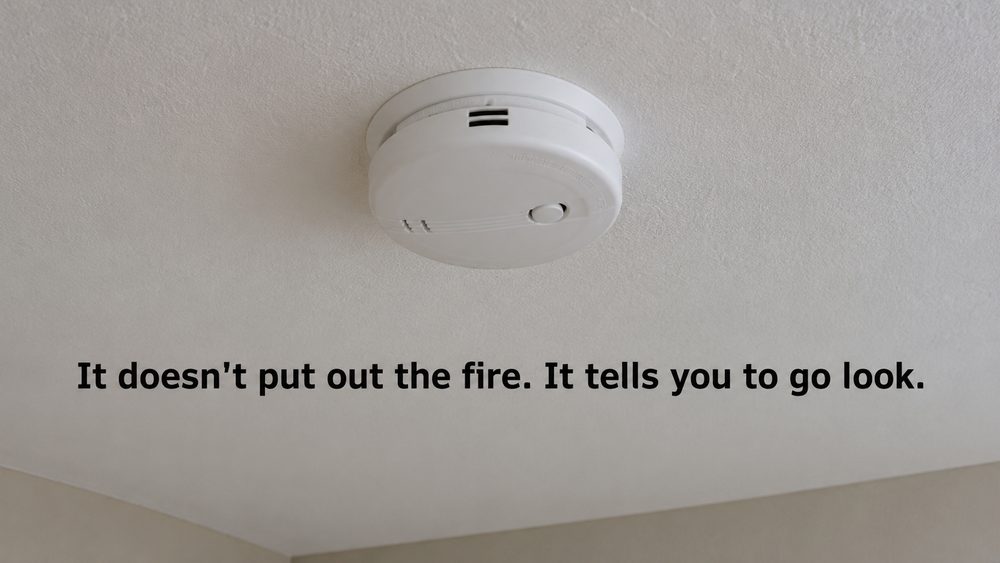
Just like a smoke alarm, because this is where most health gadgets lie and I won't.
The Hume Band 2.0 is not a diagnosis. It does not replace a doctor, a blood pressure cuff, or an ECG. It notices when your body looks like it's under abnormal strain, and it tells you to go get it checked. That's the whole promise. Nothing bigger.
5. You Own It. No Subscription to Read Your Own Body.
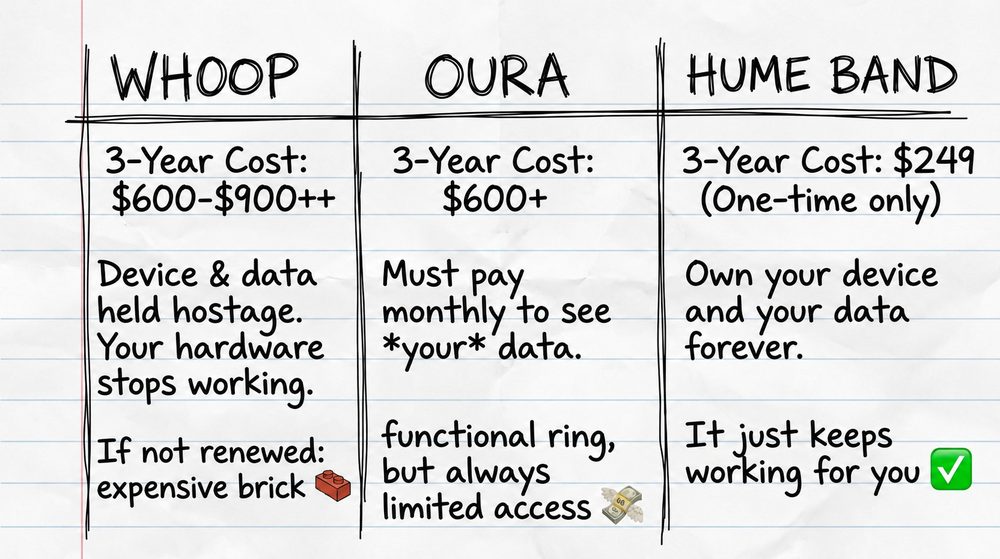
One-time purchase. The core app and your raw data are free. Forever.
Run the three-year math again, side by side, and just let it sit there.
Walk away from Hume in five years and you take your entire health record with you. It's encrypted, exportable, stored on HIPAA-compliant servers, and never sold. That was the moment for me. Not being charged monthly to see my own biology.
The Rest of Why It Fits a Real Life
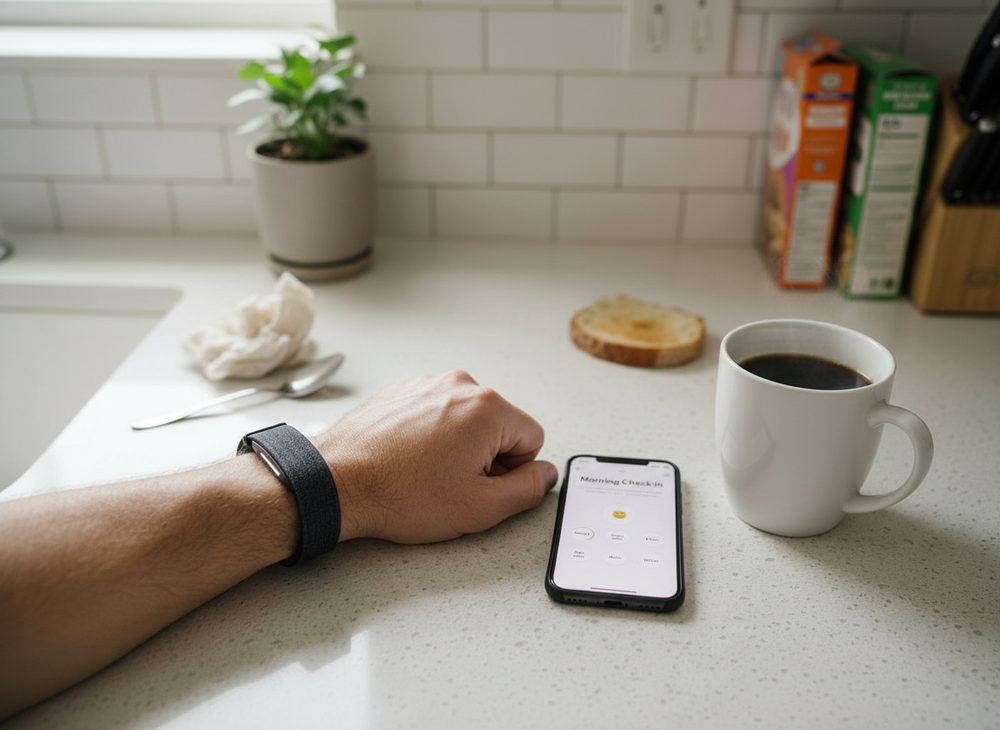
No screen. Half the reason a smartwatch stresses you out is it begs to be checked forty times a day. This one sits there, collects data around the clock, and you open the app once in the morning at a time you choose.
A check-in you control, not a scoreboard poking you all day. If a tracker has ever made you more anxious, this is built the other way.
14-day battery, IP68 water-resistant, soft strap that disappears on your wrist. An early-warning device is useless if it dies mid-week or lives in a drawer, so it's built to stay on and catch the overnight signals that actually matter.
Body composition, measured directly, if you add the optional Hume Pod. Every ring and strap guesses your aging from HRV and heart rate. Educated guess, still a guess. The Pod measures fat, muscle, and tissue directly, where aging actually happens. A finger ring physically cannot do that.
The sensors read through 5 LEDs and 4 photodiodes, more often than most wrist wearables, validated in lab and third-party testing per Hume.
It's worn by people who track recovery for a living, including 5x Pro Bowl NFL player Frank Gore, UFC champion Belal Muhammad, and Olympic medalists. It carries a physician recommendation too.
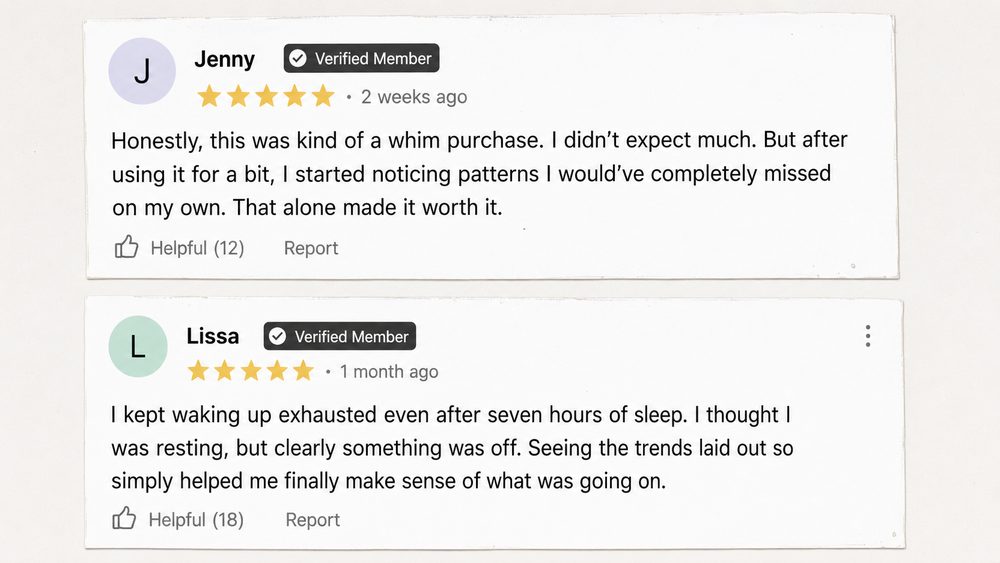
What Hume Band 2.0 Users Say
Here's Where I Actually Landed
I didn't buy a longevity miracle. I don't believe in those and neither should you.
I bought out of two feelings I was tired of. One, paying every month to read my own body. Two, staring at scores that never once told me what to do next. This fixed both. The early-warning part works exactly like a smoke alarm, no more and no less.
And the reason I stopped stalling was stupidly simple. The risk was on them, not me.
45-day money-back trial. Full refund, opened and used, no reason required.
Try It for 45 Days. The Risk Sits with Hume.
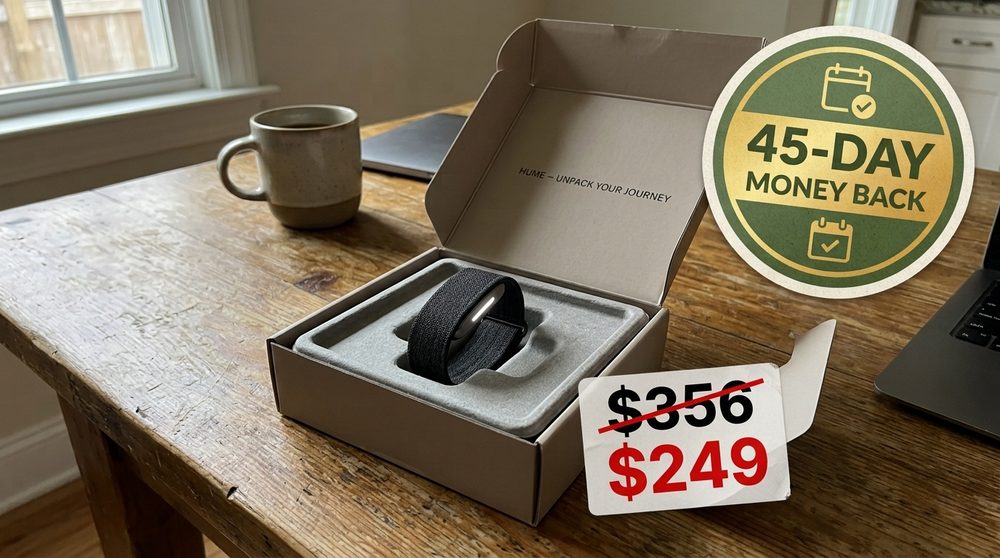
Wear it every day for 45 days. Not for you? Send it back for a full refund, opened and used, no reason required. Every band ships with a 1-year warranty you can extend to 10.
Early Warning Signals · Metabolic Momentum · Biological Age · Blood Pressure Trends · HRV & Recovery · No Subscription
Most people wait for a doctor to tell them something's wrong. You don't have to.
Frequently Asked Questions
Do I need a subscription?
No. The core Hume Health app and your raw data are free with the Band, no subscription required. Premium coaching is optional, starting at $8.99/month.
Is this a medical device? Can it diagnose me?
No. The Hume Band is a health-tracking and coaching device. It flags patterns and trends worth your attention. It does not diagnose, treat, or prevent any condition, and does not replace a doctor, a blood-pressure cuff, or an ECG. If something looks off, confirm it with your doctor.
What does it track?
Heart rate, HRV, blood oxygen (SpO2), skin temperature, sleep stages and quality, activity, strain, recovery, plus Metabolic Capacity, Metabolic Momentum, Biological Age, Pace of Aging, and blood-pressure trend insights.
What's the return policy?
45 days, no questions asked. Return it opened and used for a full refund.
How long does the battery last?
Up to 14 days on a single charge.
Is it waterproof?
IP68-rated: dustproof and water-resistant to 1 meter for up to 2 hours. Fine for showers and swimming.
Does it work with my phone?
iOS 14+ (iPhone 8 and newer) and Android 8.0+.
Is my health data secure?
Encrypted, stored on HIPAA-compliant servers, exportable any time, and never sold.
Health & claims disclaimer. The Hume Band is a general-wellness, health-tracking and coaching device. It is not a medical device and is not intended to diagnose, treat, cure, monitor, or prevent any disease or condition. It does not replace professional medical care, a blood-pressure cuff, an ECG, or a doctor. If you experience symptoms or a device notification, consult a licensed clinician.
Statistics. Figures cited (including "69% of alerts confirmed by a doctor," "74% noticed warning signals," "71% measurable biological-age reduction," and "average of 6.8 years added") are reported by Hume based on member data and reflect people who changed their habits. They are not typical results and are not a promise of any outcome for any individual.
Endorsements. Named athletes and reviewers reflect individual experiences and, where applicable, compensated or provided-product relationships. Individual results vary. Competitor pricing shown for comparison only and was accurate at time of publication.
This is an advertorial reflecting the author's experience and opinion. Privacy Policy · Terms · Refund Policy · Contact