
Your calorie target is only as good as your body data.
A calorie calculator can estimate how much you burn. But it cannot see how much of your weight is muscle, fat, water, or visceral fat. Hume Pod reveals the full picture behind the number.
Calculate Your Calories
Get a daily estimate, then see what the formula cannot measure.
Enter your details to see results
Your target will show here. Then you will see why two people with the same calorie target can get very different outcomes.
See What Calories MissThe hidden problem
Calorie calculators estimate your burn. They do not measure your body.
Most calculators use age, height, weight, sex, and activity level. That helps you start, but it cannot show whether your body is preserving lean mass, losing fat, retaining water, or drifting toward a plateau.

The scale can move while your calorie needs change underneath.
Weight alone cannot tell you whether your plan is protecting muscle or simply making the number smaller.
Why this matters
The dangerous part is treating your calorie target like a fixed truth.
A calorie estimate is useful. But when the inputs are incomplete, the plan can slowly drift away from what your body actually needs.
You can hit your target and still lose muscle.
That can lower resting energy burn and make the same deficit feel harder over time.
You can plateau even while staying compliant.
Water, muscle, and fat can all move differently. The scale does not separate them.
You can be given generic protein and calorie advice.
The better question is what your lean mass, body fat, and trends say you need next.
Better feedback
If you care about calories, you need to know what your body is made of.
The useful question is not only "how many calories should I eat?" It is "what is this calorie target doing to my fat, muscle, water, and metabolic trend?"
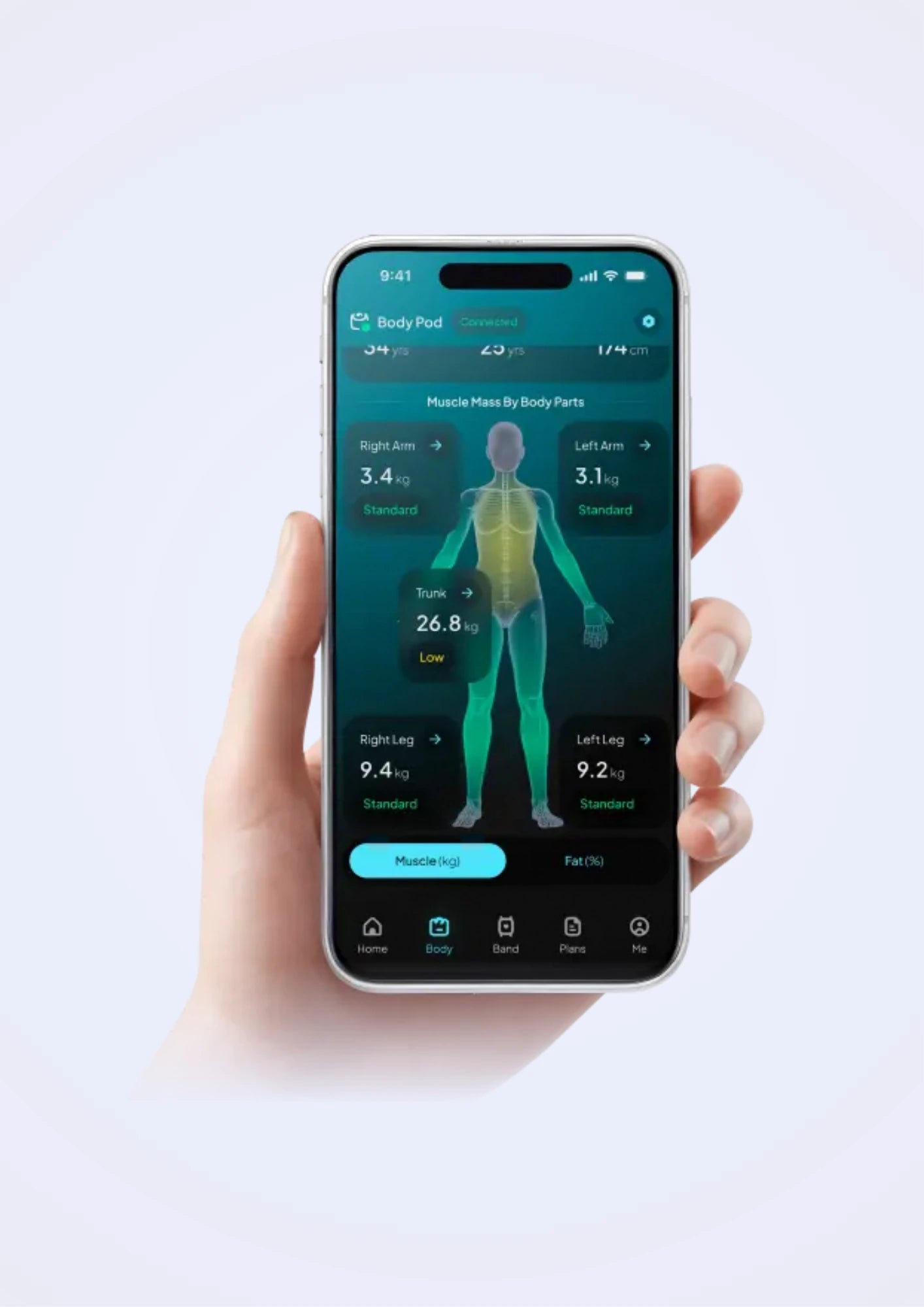
Connect calories to the body metrics that change over time.

Track whether your plan is helping you lose fat, not just weight.

Adjust before plateaus and muscle loss compound.
The plateau mechanism
The difference between "I ate fewer calories" and "I protected my metabolism."
When weight drops quickly, the calculator does not know how much came from fat, water, or lean tissue. If lean mass goes down, your daily burn can shift too, which is one reason the same target can stop working.
Your calorie plan should respond to your body, not just your weight.
Every scan helps show what you are gaining, losing, and preserving.
The better measurement system
That is why Hume Pod measures 45+ body metrics from home.
Hume goes beyond calorie estimates and weight with 8-sensor BIA technology designed to help you track body composition trends over time.
- Lean mass and body fat percentage
- Visceral fat and metabolic age
- Segmental muscle and water balance
- Data that helps personalize protein, recovery, and weight-loss decisions
Calorie questions
What should I do with my calorie result?
Treat it like a starting estimate. The next step is to watch what happens to your actual body composition as you follow it.
Why can two people with the same calories get different results?
Because weight does not show lean mass, fat mass, hydration, training status, or how your body is changing. Two people can have the same height and weight but very different body composition.
How does Hume Pod make calorie planning more useful?
It gives you recurring body composition data, so you can see whether your current target is helping you lose fat, maintain muscle, and keep your trend moving in the right direction.
Is this only for weight loss?
No. The same issue applies to maintenance and muscle gain. Calories are easier to adjust when you can see lean mass, fat percentage, hydration, and trend data instead of only scale weight.
Calorie calculator vs. body composition pod
What a calorie estimate misses, 45+ metrics reveal.
| Signal | Calorie Calculator | Hume Pod |
|---|---|---|
| Daily calorie estimate | Estimated from formula | Informed by body trend data |
| Lean mass | Not measured | Total and segmental breakdown |
| Body fat % | Not measured | Tracked per scan |
| Metabolic age | Not calculated from composition | Calculated from body data |
| Hydration | Not measured | Total body water tracked |
| Trend tracking | Snapshot only | Long-term comparisons |
Your calorie target is a number. Your body is the full story.
Use the calculator to start. Use Hume Pod to see whether your plan is changing fat, muscle, water, visceral fat, and metabolic trends in the direction you actually want.
This page provides general wellness information and calorie estimates for educational purposes only. It is not medical advice, diagnosis, or treatment. Consult a qualified professional before making major changes to diet, exercise, medication, or weight-management plans.