I'm 53. Two years ago my older brother collapsed in his kitchen. He was 58, "healthy," and had passed a physical eleven weeks earlier. The cardiologist later told us the changes had probably been building for months. Nobody was looking in the right place.
That sent me down a rabbit hole. I already owned an Apple Watch. I bought an Oura Ring. I rented a Whoop. Then someone in a longevity forum mentioned a fourth device I'd never heard of, the Hume Band 2.0, and called it "the only one of the four that's actually paying attention to your heart trends over time."
I didn't believe it. So I tested it. Ninety days, all four on at once, plus the clinical gear to check their work. This is the honest write-up. I'll tell you which one I kept, but first I have to tell you why I was asking the wrong question the whole time, and so are you.
These aren't four versions of the same thing.
Here's the assumption I started with, and I suspect you share it: these are all basically health devices, so I just need to pick the best one. That's wrong, and it cost me 90 days to figure out why.
Three of these four are fitness optimizers. They make a healthy person perform a little better: sleep a little deeper, recover a little faster, hit a few more rings. They're good at that. But there's a different job, with almost nothing to do with fitness. Call it heart-trend tracking: watching the slow trends in your cardiovascular system for changes that often show up before any symptoms, the kind your yearly checkup is too infrequent to catch and your smartwatch was never built to look for.
Fitness tracking
Tells you how your workout went. Optimizes a healthy life.
Heart-trend tracking
Watches for the changes that matter most. Notices the drift before you feel it.
Once I understood those are two different categories, the comparison got simpler, and a lot more uncomfortable.
What actually matters, and what's just theater.
So I threw out steps, rings, and strain scores, and judged all four on the five things that actually map to catching a problem earlier, the same signals my brother's cardiologist watches for. I scored each one out of 100.
-
✓Continuous overnight monitoring, not a spot-check you have to remember to take.
-
✓A heart-trend model that helps you notice unusual changes over time, not just a heart-rate readout.
-
✓Body composition and biological age, the longevity markers, not just activity.
-
✓You own the device and your data, forever.
-
✓No required subscription quietly draining your account every month.
Everything else, the on-demand ECG theater, the readiness scores, the closed rings, is fitness. Useful, but not the job. Here is how the four finished.
I ranked all four. Worst to best.
I love my Apple Watch, to be clear. For messages, workouts, maps, and the occasional ECG spot-check, nothing beats it. But after 90 days, it's a phone on your wrist: convenience and notifications at the center, fitness bolted on. The on-demand ECG only tells you about the moment you take a reading, not the slow trends while you sleep, and you charge it nightly, so it's off your wrist exactly when the overnight data matters most.
Pros
- Best notifications & app ecosystem
- On-demand ECG spot-check
- Polished, familiar
Cons
- Charges daily, off your wrist overnight
- No body composition or longevity metrics
- No continuous heart-trend tracking
The Oura Ring is the one I most wanted to win. It's elegant, comfortable, and the sleep tracking genuinely changed my bedtime habits. But Oura is a wellness ring: sleep, readiness, recovery, very good inside that world. Outside it, no body composition, no heart-trend tracking, and a membership every month on top of buying the ring. Stop paying and the app goes dark.
Pros
- Elegant and comfortable to wear
- Best sleep tracking I've worn
- Solid readiness & recovery
Cons
- No body composition at all
- No heart-trend tracking
- Monthly membership on top of the ring
Whoop was the closest of the three. It takes recovery and strain seriously, the overnight data is rich, and for trained athletes it's a legitimately impressive coach. Two things stopped me cold. First, it optimizes strain and recovery for performance, not heart-trend tracking. Second, and this is the one that bothered me most, you never own it.
What Whoop really costs
I'd been treating these as things I'd buy. With Whoop, I was signing up for a bill that never ends.
Pros
- Serious recovery & strain coaching
- Rich overnight data
- Great for trained athletes
Cons
- You rent it forever (~$700 / 3 yrs)
- Cancel and you own nothing
- No heart-trend tracking
Already see where this is going? The Hume Band 2.0 is $249 today, one time, no subscription required.
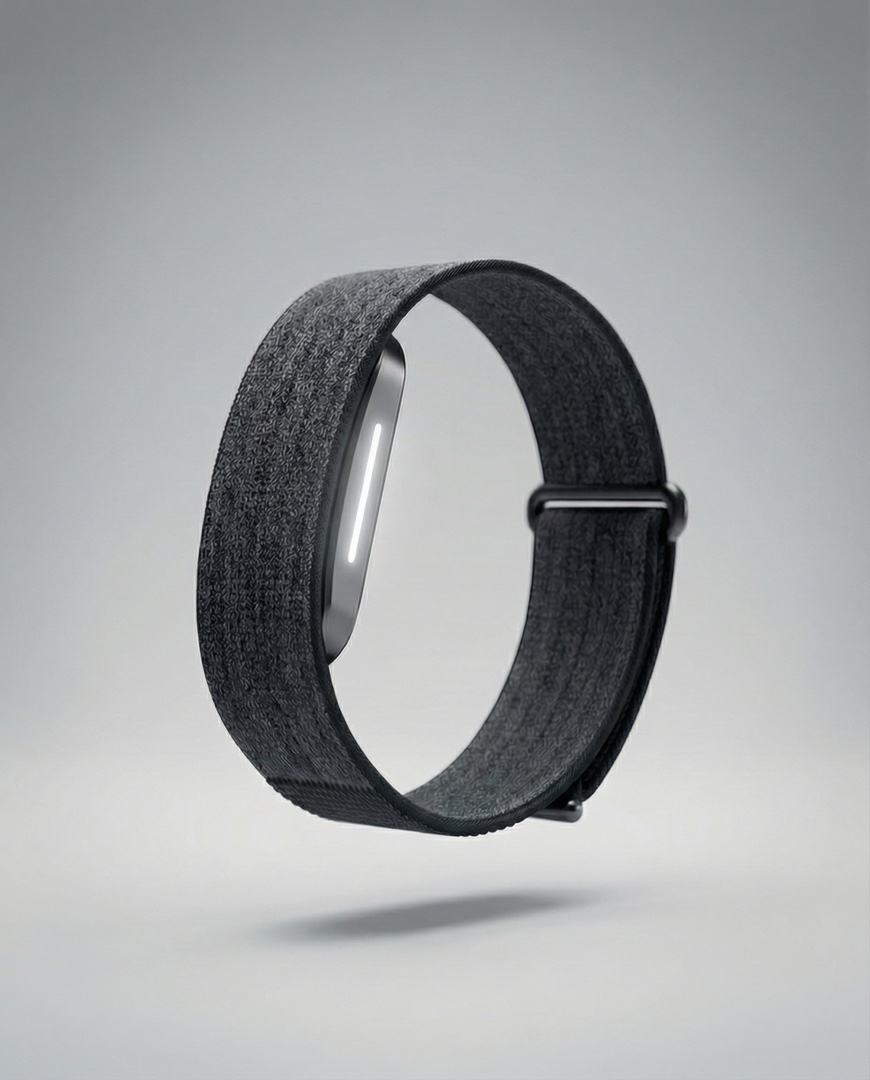
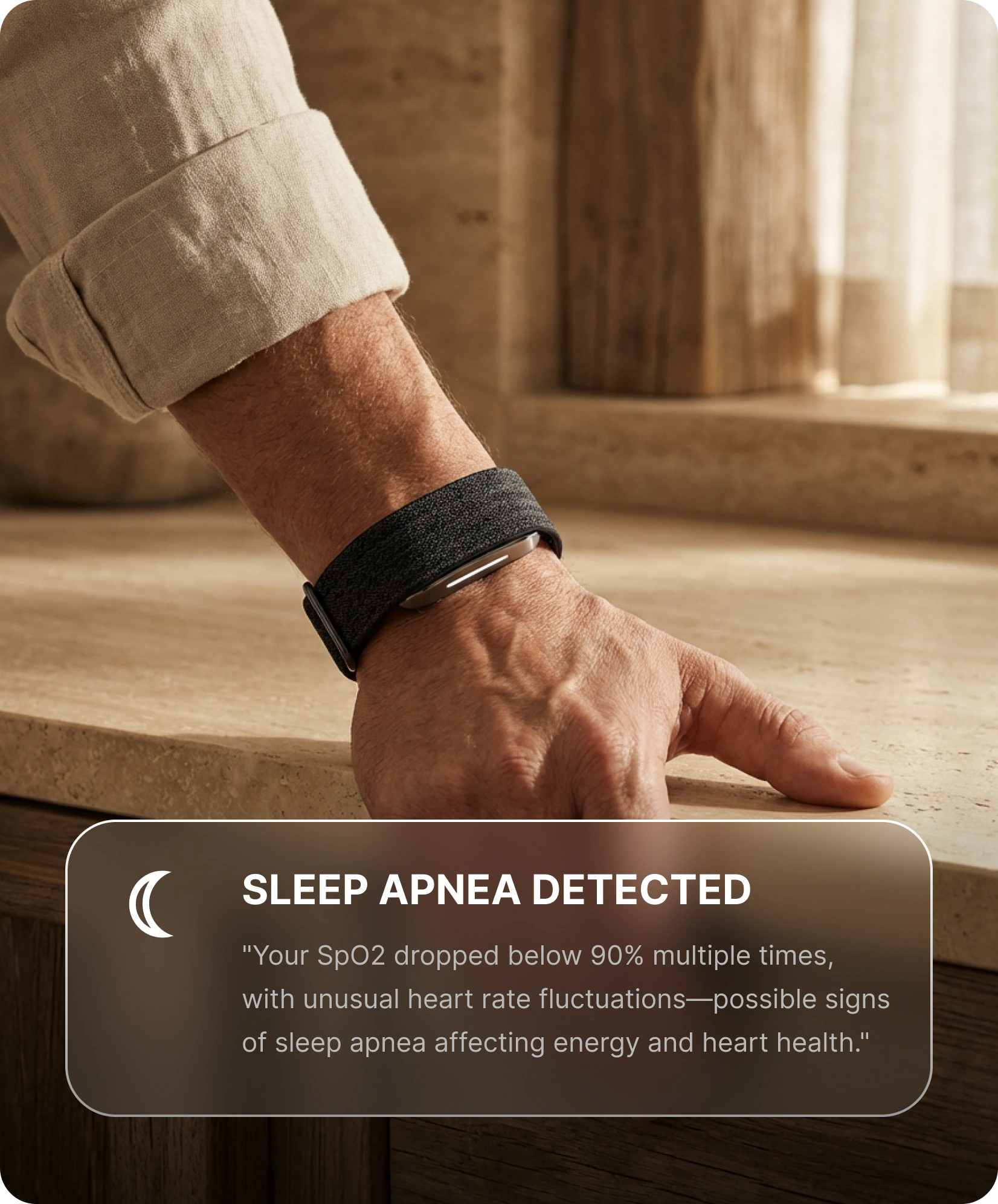
See why Hume Band 2.0 wonSo what is the Hume Band 2.0 doing differently? While I slept, it tracked the trends the other three mostly ignore: heart-rate variability, cardiovascular-stress signals, inflammatory trends, blood oxygen, and skin temperature, not as one-off readings but as moving lines it watches night over night. What sets it apart is the AI layer, a heart-trend model that helps you notice unusual changes over time. When several markers drift together, it flags the change and tells you, in plain English, to get it checked.
Pros
- Heart-trend tracking that helps you notice change
- Body composition & biological age
- Blood-pressure trends, no cuff
- Own it and your data forever
- No subscription required
- 14-day battery, worn 24/7
Cons
- Online only, not in stores
- A newer name than Apple or Oura
- Trends worth a conversation, not a diagnosis
It doesn't diagnose anything and doesn't replace your cardiologist. It helps you notice changes sooner, so the conversation with your doctor happens sooner. Three of these optimize a healthy life. This one helps you pay attention to the trends underneath it.
The clinical version costs thousands.
Halfway through, I asked my doctor what it would take to properly track these things the clinical way: continuous heart rhythm, body composition, the inflammatory and metabolic markers that shift before you feel any different. The answer was sobering.
The clinical way, every year
Thousands a year, plus scheduling and waitlists, and you still only get occasional snapshots. The whole point of catching something early is seeing the trend move, and snapshots miss trends. That's the gap the #1 pick closes: that ongoing signal, worn at home every night, for a one-time price.