


Weight cannot tell you what changed.
A lower number can reflect water loss, fat loss, a lighter meal, or a harder training week. A higher number can come from hydration, muscle, soreness, digestion, or normal routine shifts.
That is why weight can be technically accurate and still incomplete. It tells you the total. It does not explain the mix.
Progress can look flat when your body is not.
One of the easiest ways to quit a routine is to believe nothing is happening. The scale stays the same, so the effort feels wasted.
Body-composition trends can help surface a different story: whether fat, lean mass, water, and other signals are shifting underneath the same body weight.
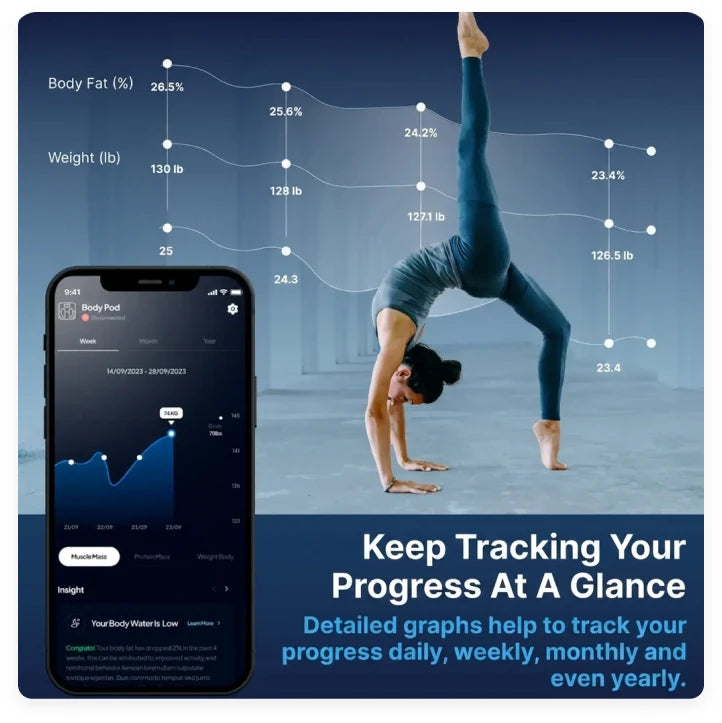
Most smart scales still leave you translating numbers.
More metrics do not automatically create more clarity. If every check-in turns into a spreadsheet of numbers, most people go right back to staring at weight.
Hume Pod is built to help organize body-composition signals into a repeatable at-home view, so users can see the patterns worth paying attention to.
GLP-1 and weight-loss routines need more context than "down."
When someone is actively losing weight, the question is rarely just whether the number is falling. The bigger question is what is changing along the way.
Hume Pod helps users track body-composition patterns at home, then use that visibility to make more informed routine decisions and discuss changes with a qualified professional when needed.
DEXA is a useful benchmark. Daily decisions need a repeatable home view.
DEXA scans can be helpful for periodic body-composition benchmarks, but they are not how most people make everyday food, training, hydration, and recovery choices.
Hume Pod gives users a consistent at-home check-in between occasional benchmarks, helping them see how their body-composition patterns trend over time.
