Why your waist can change in midlife, even when your weight hasn’t

Changes in estrogen can shift where your body stores fat during the menopause transition. Here’s why the number on your scale may miss part of that change.

Your jeans feel tighter around the middle. You’re still taking your walks and eating much the way you always have. Yet the scale barely moves.
If that feels familiar in your 40s or 50s, there is a reason to look beyond total weight. The menopause transition can change where your body stores fat, even without a major change in weight.
Why this can happen: estrogen helps influence where fat is stored
During perimenopause, estrogen levels fluctuate. As women move through menopause, those levels decline. Lower estrogen is associated with a shift toward storing more fat around the abdomen rather than the hips and thighs.4
That helps explain why your middle can change even without a big change on the scale. Aging, changes in muscle mass, activity and sleep can also contribute. This doesn’t happen to every woman at 40, and hormones aren’t the only factor.5
A changing waistband isn’t proof of excess visceral fat. But it does reveal the limit of a single total: your weight cannot tell you what is changing inside it.
The fat you can pinch isn’t the whole story
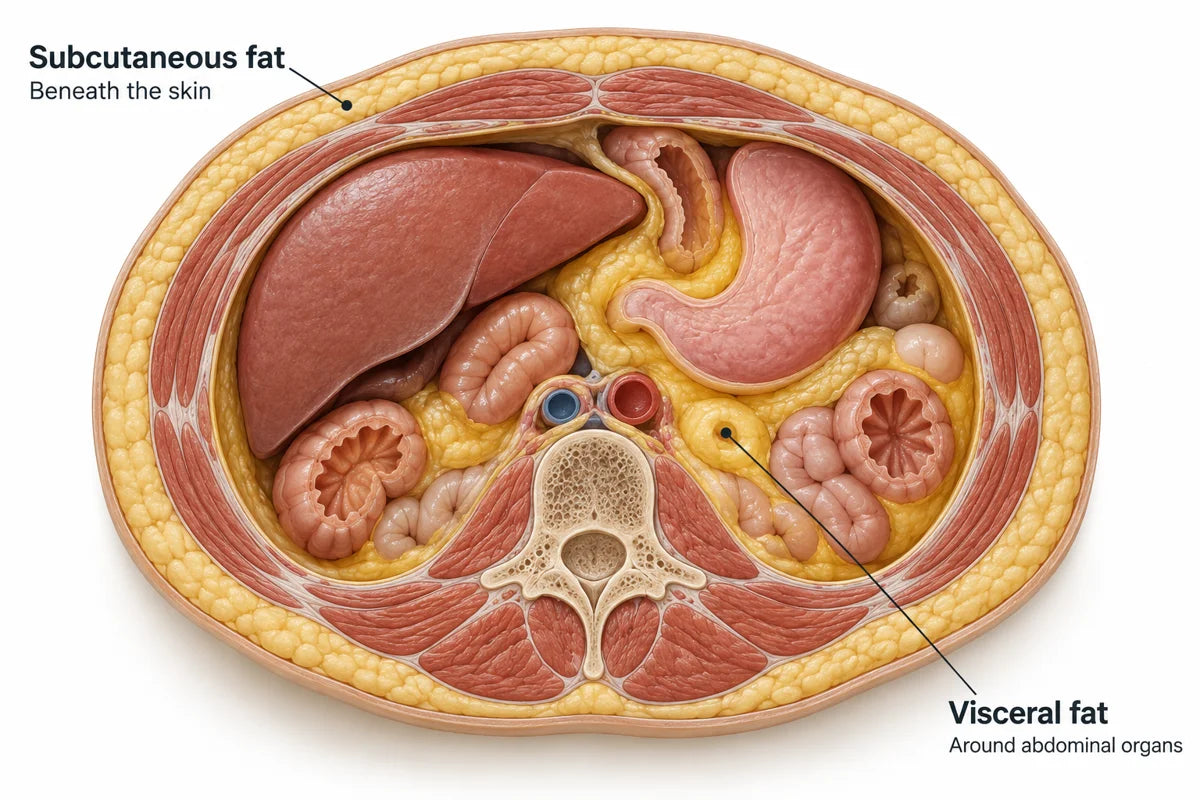
Subcutaneous fat is the soft layer just beneath your skin. It’s the kind you can usually pinch.
Visceral fat is found deeper inside your abdomen, around organs such as the liver and intestines.
Some visceral fat is normal. Excess amounts are associated with insulin resistance, type 2 diabetes and cardiovascular disease. This is why fat distribution matters beyond how your clothes fit.1
That doesn’t mean you should diagnose yourself from a mirror, or turn an unfamiliar number into a reason to panic.
It means that appearance and total weight are incomplete ways to understand body composition.
Why the scale can miss a change that matters
A weight-only scale adds muscle, fat, water and everything else into one number. It cannot tell you whether their proportions have changed, or distinguish fat under the skin from fat around your organs.
Your habits still matter. Better information helps you follow what happens alongside them. Body composition estimates add context to your weight; they do not measure estrogen or explain the cause of a change on their own.
A different approach: Make the missing information visible
Imagine your next check-in giving you more than your total weight.
- A body-fat estimate to put that weight in context.
- A muscle measurement to follow alongside it.
- An estimated visceral-fat index you can return to over time.
Now the question becomes more useful: “What am I seeing across my check-ins?”
That is the role of an at-home body composition analyzer.
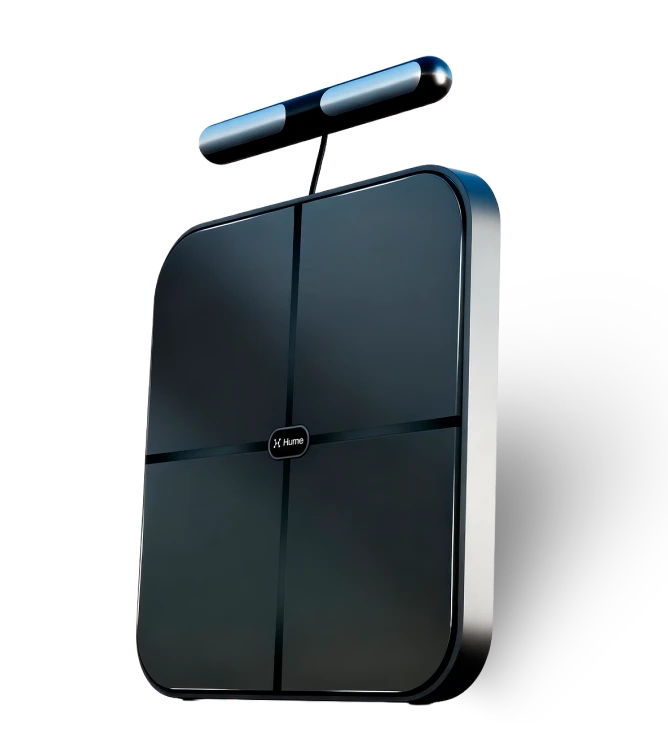
The at-home solution: Hume Pod
Hume Pod pairs with the Hume app to give you body composition estimates, including a visceral-fat index.2
You step onto the device, take hold of the handles and follow the measurement instructions. Your results appear in the app, giving you a starting point you can come back to.
The important difference is what you can follow after that first check-in.
Instead of relying only on total weight, you can look at composition readings together and see how the pattern develops.
The three-part process
Step 1: Take your baseline
- Set up your profile in the Hume app.
- Stand barefoot on the Pod’s sensors.
- Hold the handles and follow the positioning instructions.
Step 2: Understand the reading
- Find your estimated visceral-fat index.
- Look at it alongside the other body composition information.
- Think of the first reading as a starting point for comparison.
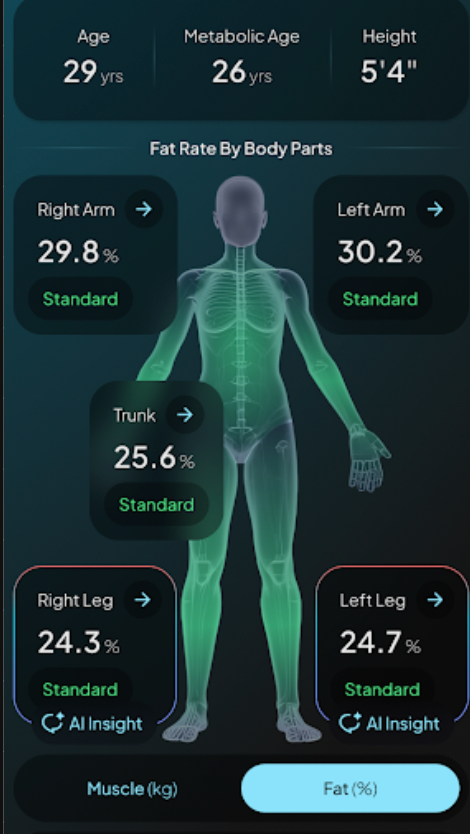
Step 3: Follow the pattern
- Repeat your check-ins under similar conditions.
- Review multiple readings together.
- Put the trend alongside your routine, how you feel and any professional guidance.

This gives each check-in a purpose. You’re building your own record, rather than trying to read the whole story from one morning’s weight.
What is actually happening during a measurement?
Hume Pod uses bioelectrical impedance analysis, or BIA. Sensors in your hands and feet take electrical measurements that are used to estimate body composition.3
The visceral-fat index is an estimate. It isn’t an image of your organs or a medical diagnosis.
That distinction helps you use the information well: look for a pattern over time, rather than treating one reading as a verdict.
Hydration, timing and measurement conditions can affect BIA results. Following a consistent routine makes your check-ins more useful to compare.
“What would I actually do with the number?”
Start by getting familiar with it.
Then, as you repeat your check-ins, look at the trend alongside the habits you’re already working on.
Are you keeping a consistent routine? Are you looking at comparable readings? Is there something you want to understand better or discuss with a healthcare professional?
Those are more useful questions than simply asking whether you weigh less than yesterday.
The Pod supplies the measurements. You make the decisions and take the actions.
Why consider Hume Pod?
- More context than weight alone. See body composition estimates alongside your total weight.
- A visceral-fat index to follow. Bring an often-overlooked part of body composition into your check-in.
- A routine you can repeat at home. Take measurements without building your day around an appointment.
- Your readings in one place. Return to the Hume app and look at the pattern over time.
The first reading is only the beginning
It’s tempting to look for one dramatic moment that changes everything.
But the practical value here is quieter: a better starting point and a way to keep paying attention.
Your total weight might be familiar. Your body composition might tell you something you haven’t considered. Either way, you have more information than you had before.
Over the weeks ahead, those repeat check-ins become a record you can return to.
Less trying to remember. More being able to look.
What to know before ordering
Do you need a paid subscription?
Core body composition tracking is available in the Hume app. Optional paid features are also offered. The product page explains the current options.
Does the Pod reduce visceral fat?
The Pod measures and tracks. Changes in your body come from your actions and other factors, not from taking a reading.
Where can you see the current price?
Hume’s official product page shows the available offer and purchase terms for your location.
Take a closer look at Hume Pod
You can explore Hume Pod directly through the official Hume website.
There, you can see how the product works, review the app options and check current pricing, delivery and return terms before deciding.
Remember the question at the start: Why can your middle change while your weight stays familiar?
Midlife hormone changes can affect where fat is stored. A weight-only scale gives you one total, without showing that distribution.
Hume Pod gives you another way to look: body composition estimates, an estimated visceral-fat index and a record you can follow over time.
You’re already paying attention to your body. Now you can give that attention more information to work with.
Use the button below to explore Hume Pod and see the current offer on the official website.
See Hume Pod, check the current offer and choose what’s right for you.
Sources and further reading
- Harvard Health: A healthier way to look at body fat
- Hume: Visceral-fat tracking
- Hume Pod: Product information and app features
- Mayo Clinic: Belly fat in women
- Mayo Clinic: The reality of menopause weight gain
- Hume Health: Dr. Yas (Yaz) Dominguez’s credentials and clinician profile
- Institute for Functional Medicine: Yasmany Dominguez’s practitioner profile
Advertisement by Hume Health. Product photographs and demonstration footage show Hume assets. Editorial illustrations were generated with AI and do not represent a customer, medical scan or measured result.